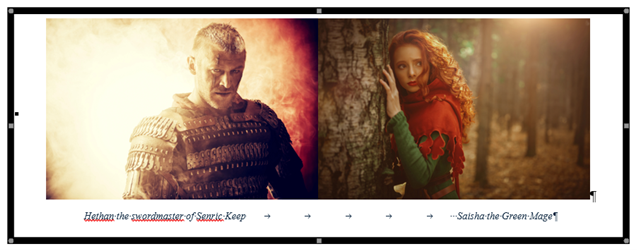
Danger cracks the curtain in this installment of Weave a Wizardry Web.

XIV

Noon was Alstera’s first opportunity to speak with her grandmother without Uncle Raigeis in attendance.

She heard him grumbling about the colonel he had to send to Chanerro Pass. Once he was ensconced in his study, she pounced on the servant taking the creamy soup and pasty to Letheina.

The servant refused to cede the tray to her. “More than my job is worth, my lady,” but she allowed Alstera to follow her.

“Good morning, Grandmère.”

“It’s past the nooning, child. Have you slept so late?”

“I’ve been up since Daggry. At the Archives.”

“Ah. Rombrey said you’ve been scouring the old records. He did not say for what purpose. I am pleased that you enjoy delving into our earliest records.”

Her grandmother motioned for the tray to be placed before her then dismissed the servant. She broke bread and dabbed butter on it. She sipped her soup. Then she broke the crust off the pasty and tasted it.

Alstera remained quiet. She’d had too many lectures about not interrupting her grandmother’s meal. When had Rombrey talked with his sister? The old man had left his tower, for Letheina wouldn’t climb all those steps to visit her brother. When had they talked? Or had they scryed? Would Raigeis would call that a profligate waste of power?

Letheina slowly consumed the soup, then the pasty, then the buttered bread. She finished with a strong cup of tea before pushing the tray away. Alstera moved to the desk and lifted the tray, carrying it to the table beside the door. Then she returned and perched on an upholstered chair. Time to tackle her grandmother.

“Do you know the reason I am spending hours upon hours in the Archives? I am looking for information about the Dragon Dark. I want to find something we can use to stop the next Dragon Rising.” That wasn’t a lie. That had been her original purpose.

Letheina’s “hmph” scoffed at the idea. “Will you never learn to think? You’ll not find the Dragon Dark in the archives. The Enclave rose after that devastation.”

“As did Mont Nouris and all the other countries. The archives are not completely useless, for I have found a few mentions of the Dragon Dark in the earliest scrolls. Are there earlier records? In Faeron?”

“You’re not to go to Faeron. The Maorketh holds two of mine captive. That damned Fae queen will not have an opportunity to control a third.”

“Grandmère, we have to prepare. Frost Clime is gaining influence in the lowlands. Iscleft barely holds its borders.”

“We have great strides at Chanerro Pass. We are defeating Frost Clime there.”

“True, but Iscleft loses more than we gain. And the rumors out of the Wastes, beyond the Wilding—.”

“Rumors, bah!”

“The rumors out of the Wastes,” she continued patiently, “talk of dragons flying. We cannot ignore these signs. Dragon Rising is coming.”

“I know no such thing. Who tells you to argue these things with me?”

“No one tells me. I pay attention. I understand the reports. You know I excelled in my studies. I can comprehend what is happening, and what is happening is that Frost Clime is gaining ground against us. When the dragons rise, Mont Nouris and the whole Wizard Enclave will be destroyed. Again.” Is Grandmère blinding herself? Or is she blind to the reports that come in? Is Raigeis even telling her what is happening?

“You spend too much time in the Archives. You must interact more. You do not go to parties with your cousins. You once did. You should. Why has that changed? Where is that young man you introduced me to at Yule?”

“Gage?”

“No, not Gage. Leigeist, I think his name was.”

“He was Yule. He only wanted a relationship because he thought the ArchClan’s granddaughter would help him advance. I am with Gage now. Sauveurs’ son.”

“Sauveur’s son? I remember. His mother is Clan Rochein. Where is Leigeist now that you’ve dropped him?”

“I didn’t drop him. Uncle Raigeis posted him to Iscleft. An indefinite posting, like Tante Camisse’s.”

“Who is this Gage? I do not remember that name in a binding ceremony.”

“He’s not a wizard. He’s not even an adept. He’s an Enclave guard, a captain. He’s on duty.”

“A Naught then. You are coupling with a Naught now.”

“He has power,” she defended him, even as the slight to her choice stung.

“Bah! If he is not even an adept, he is as useless as a Naught. Leigeist, at least, is a wizard.” Her fingers tapped the wooden front of her chair arm. “Posted to Iscleft by Raigeis? Your uncle keeps good watch over you. You had no deep feelings for the Leigeist, I am glad to know. I would not have wanted you to hare off after him to Iscleft.”

“That relationship is over.” She didn’t speak of her nights of weeping, her threats to leave. Her great-uncle Rombrey had reasoned with her, reminding her of Leitgeist’s many requests for meetings with the upper ranks in Clan Letheina and his disappointment when she refused. Nor did she mention her anger that Uncle Raigeis felt he must keep a good watch over her. “I am with Gage now. He admires me.”

“Admiration can be an awkward bed-fellow. Better to remain at lust or even obsession. And admiration can be difficult. It can lead to reverence, and reverence is a short step to awe. Even shorter is the step from awe to jealousy and thence hatred. I know, granddaughter. I know this lesson very well.”

Alstera barely heard that old pain. She promised herself to turn over those words later, matching them to events in her grandmother’s long life. For now, she needed to focus on her reason for this meeting without her uncle’s officious interference. “Grandmère, I did not come to talk about Gage. Or Leigeist. Or the Archives. I came—I saw Crispin at the reception.”

“Crispin?”

“Gerrault’s brother.”

“Ah, he’s Charanaise now, isn’t he? What did he want?”

Surely her grandmother knew. “He wants to see his son Nevil, who is being detained by the Council for questioning.”

Letheina snorted, proving that she did, indeed, know. “Arrested and interrogated is more accurate. How does his arrest matter to you?”

“Nevil is a friend. One of those friends that you suggest I go to parties with.”

“You have wasted several days then. He was arrested last week.”

“I did not learn of it until last night.” A lie, but she kept her gaze steady. Her grandmother was ArchClan. For all she had entered her declining years, she controlled vast amounts of power, both the energy of magic and the politics of the Enclave. Experience gave her wisdom to see far beyond simple words. Skepticism kept her looking for motives and intentions, cleaving the words of factions from the words of the heart with a sharp blade.

Thus far, Letheina listened with half an ear. Some distraction prevented her full attention. The distraction served Alstera, for then Letheina’s full attention wouldn’t see the lies hiding behind Alstera’s mask of indignation.

Letheina pushed aside the sheaf of papers before her. “Why do you come to me with this? I had nothing to do with his arrest. The Council of Five arrested this Nevil. Perrault’s comeis carried out the order. Nevil attacked the comeis with spells. That increases his guilt.”

“I understand Uncle Raigeis was there.”

“Raigeis had to be. Nevil belongs to Charanaise. She never should have received the vote for clan mater. She is too young. She is too inexperienced. A foolish attempt to bring new blood to Enclave leadership. Charanaise kept no watch on the wizards and adepts sworn to her. And he began dabbling in dark spells.”

“His family is not allowed to see him, Grandmére. Nevil was awakened in the middle of the night and bound with spell-binding cords. They hauled him through the streets like a criminal. And now that he is in the cells beneath Moot Hall, no one can visit him. No one has received any message about him. He could be badly injured. Or dead.”

“The magisters followed all rules required to arrest a wizard using forbidden spells.”

“Was that the only reason my uncle Raigeis felt that he must be there?”

Her grandmother’s mouth twisted. “Don’t be so suspicious, girl. Raigeis was present for form’s sake. And he reported to me all events that occurred, including Nevil’s accusations. I am ArchClan. I should know what happens in the Enclave. The Council does not inform me of their deliberations, only of their actions. We often do not receive notice of that until the actions have occurred. For once, though, but they informed Raigeis of their plan to arrest Nevil before the event. He watched Nevil’s removal to Moot Hall. He attended the interrogations.”

“No one else was informed of his arrest. Not even his family. He just disappeared. Only his family know he’s imprisoned in Moot Hall. They didn’t know that a handful of days ago. Nor do they know any reasons for his arrest. They should, shouldn’t they? If they are to help him mount a defense.”

“The gemot court is not a law court, granddaughter. The Council will hear no defense, no mitigation. They hear the facts, the proof of those facts, and witness testimony. The Five will hear nothing else.”

Alstera could barely keep her seat. “No defense? Not at all? That’s unfair. He should be allowed to give his reasons.”

“Reasons? Are there any acceptable reasons for breaking all five tenets of the Wizard Enclave? The tenets are our laws, child, and he flouted every one?”

“Is that what he did?”

“He was reviving the Nexus. We cannot allow that. The Nexus breaks all five tenets that guide our actions and interactions demand that we avoid that trap. We maintain balance between our will and the needs of others. We serve others before ourselves, even to the risk of our own lives. Our power does not enslave others; it frees them from any shackles. These tenets prevent that downward spiral to sorcery. We swear an oath to uphold these: the balance of energies, service and sacrifice, and freedom from thralldom.”

“I remember,” she murmured. “I have not forgotten.”

“Nevil broke these tenets. He used the forbidden Nexus, forbidden because it enslaves others. Nevil drove his power into another’s mind in order to control them, in order to force his will upon them. He commanded them to obey and cared nothing that his order forced them into a deed that would never personally follow.”

Alstera winced, remembering her command to Gage.

“These alone are errors enough. Comeis Sullin Bourne found writings that Nevil planned to work spells with the ancient blood magic. We do not yet know if he is guilty of that. Breaking the ban on the Nexus is foul deed enough.

“But, Grandmére, the Nexus was only banned because of Saldoran. For one hundred years and longer, from before the founding of the Enclave, our wizards used the linking spell to increase their power. Without the Nexus, would our wizards have defeated the dragons during the Dark? Yes, the spell seems contrary to our five tenets, but surely our wizards who wielded the Nexus confirmed that those whose power they took did so willingly? That they had consented. Their powers were not just ripped away. And once the spell ended, their powers were returned.”

“Too many wizards in the early days of the Enclave did not restore power back to those who agreed to the spell. We wizards did not ban the Nexus lightly, child. The debate lasted for weeks. But too many knew personally the foul evil that Saldoran had committed. And since then, we have survived without the Nexus for another hundred years. Alstera, child, you will not win an argument using past behavior. We have advanced since then. We now understand the dangers of the Nexus as we did not understand it until Saldoran’s rebellion. Why do you defend Nevil’s use of it? Have you tampered with the Nexus?”

  “I have not,” she said clearly and truthfully. She hadn’t, not yet. Not the Nexus, just a command spell. Gage had had no power for her to take. “I wish to speak with Nevil. I need to do so. I need to know where he searched in the archives. I need to know the reason he broke the ban on the Nexus. I know Nevil, Grandmére. He had no grand plans of ruling over others. He would not have broken the ban without good reasons. Please let me speak with Nevil.”

“And applaud his breaking of the tenets? No. We are not arrogant sorcerers who think no law binds them. We hold life sacred. The five tenets guide us.”

“The five tenets guide us, but they limit us.”

“Careful. You are my granddaughter. You are five and twenty, long past folly and rash judgments. This argument, however, makes me doubt your obedience to the Enclave and our tenets. This challenge can be construed as sedition.”

“Questioning the tenets is not sedition, Grandmére. Are we not taught to ask questions throughout the whole of our training?”

“Questioning the tenets in order to overthrow them is sedition, granddaughter. Beware. If you break the tenets, I will turn you over to the Aged Sages myself.”

“I do not intend to break the tenets. I do not intend to practice the Nexus. Be easy on that matter. But Dragon Rising—.”

“Dragon Rising is a myth, used the Fae alliance to frighten us into increasing their presence and accepting their influence.”

That sounded like her uncle Raigeis. Alstera wanted to argue, but on this point she knew her grandmother would stop listening entirely. She suspected that she had already pushed too hard. Letheina always put her position as ArchClan far before family.

She resumed her request cautiously. “I understand from the archives that those in the Moot Hall cells are kept in close confinement. I would not be able to enter his cell.”

Letheina snorted. “You would not be able to touch the bars. The iron is spell-bane.”

She nodded. “I could take him food. Papers and ink and quills to write upon in case he wanted to send a message to his family.”

“Any messages must be read by a Council member. He cannot send an encrypted message to those who convinced him to work this spell.”

“If I spoke with him—. The guards would hear our every word, I know this. But I would then be able to take a message to his family and his clan. I could reassure them that he is well treated and not injured.”

“You would not be admitted, child. Only Enclave guards and Council magisters may see him.”

Alstera stood and paced away. When she paced back, she saw Letheina’s narrowed eyes. Is she questioning my loyalty? Does she think I want the Enclave to fall? “Everything I do is to protect the Enclave. For the Enclave to endure, we must defeat Frost Clime. The sorcerers know we must abide by the tenets. When the dragons rise, they will use our adherence to the tenets to defeat us. Can you not see that?”

“I see that abandoning the tenets to defeat the enemy is turning ourselves into the enemy. Child, that talk led the investigators to Nevil. Be careful to whom you say such things. You must believe that the tenets limit us, but they actually increase our power. Has Rombrey not taught you this?”

“He has. He repeats it daily.”

“But you have yet to divine what it means.”

“I know what—.”

“No. Heed me, granddaughter. The sorcerers seem to have great liberality of power and thus the advantage over us. Yet look at any spell. It has limits and boundaries. Without those limits, much of the power poured into a spell dissipates. Energy slips into Chaos. All wizards and sorcerers know this. You will find little difference between the spells of wizardry and sorcery. The procedure of the spell, the weaving of power through it: those are not the difference. Only in the direction of the spell and the boundaries that define its actions do we see the difference. Talk to a Fae. Talk to your beloved aunt Camisse. They will all tell you much the same.” She crossed her hands and grumbled, “I have not had to teach rudiments of spell-craft for decades. You should know this. I should not have to re-teach it. Your friend forgot, and he willfully and deliberately broke the tenets. Do you applaud his actions?”

She knew everything her grandmother said. She had worked spells for two decades. She remained the youngest Enclave member to have achieved wizard status. Am I missing something? The boundaries of the spell and the tenets increase the might of the spell? “What will happen to Nevil?”

“That is up to the Aged Sages.”

She bit her lip. After a moment, she ventured, “He must feel very alone. When will the trial be?”

“It is not a trial. It is an exhibit of facts and proof.”

“Nevil won’t be allowed to speak at all?”

Letheina compressed her lips. “I do not know. Such a serious crime has never happened in my tenure. As ArchClan, I may attend the exhibit. I am not permitted to speak. Raigeis is required to attend. He presents facts and proof.”

“Will Nevil’s family be allowed to attend? Or his mater Charanaise? No? May I speak with him? I can take word to Crispin of how Nevil is faring. Nevil is his only child. Last night, Crispin looked at his wit’s end.”

“I have no authority at Moot Hall.”

“Not even with the Enclave guards?”

Letheina’s mouth twisted. “None with the Council magisters, but a guard might accept my written word and a pass.”

“Please, Grandmère. If I can give him any encouragement—.”

“He has been apprised of the procedures of the Moot Court. He is currently being apprised of the exhibits for the Moot Court. He may also produce his own facts and proofs, and one of the Council magisters will present his exhibits. This is allowed. He does not need encouragement.”

“And if they find against him? What will happen?”

“It is not finding against him. It is a determination of his actions against the tenets. Foolish child, what do you think will happen to a wizard who breaks the tenets of the Enclave? His powers will be bound. At the least, he will be banished. At the most, execution. Do not give him false hopes. You may not speak to him on the exhibits brought against him. I ask that you only speak of the commonplace. I will not have the five sages claim that I meddled in Council business.”

With that, she levered up from her chair. She stood a moment, her fingertips touching the chair arm, then she walked slowly to her desk. Once lowered into the chair there, she drew a parchment to her, dipped a pen in the inkwell, and began scratching out a pass.

Alstera watched and considered Nevil’s situation. He was in direr trouble than she had realized. No wonder Crispin was frantic.

Exile or execution. If the exhibits against him proved that Nevil had broken the tenets, then the binding of his powers would be a blessing.

Nevil would not be judged innocent. He had broken the tenets. She could hear the echo of his vehement claim that breaking the tenets would be necessary to defeat Frost Clime. And his first step would be to try the Nexus.

He had tried it. As she intended to. The Nexus was a key to defeating the sorcerers who had no tenets that limited their spells. And the sorcerers had to be defeated before Dragon Rising.

For the dragons would rise. If they allied with the sorcerers, every land and every person was doomed.


XV


Faone kicked her heels for several hours while waiting to see Sanglier. Pannoth had tried to flirt, but she’d ignored him. Martel, when he deigned to acknowledge her, had once excited her, but she had tired of his occasional attention and his selfish coupling. More often than not, Martel drew Runniger into the coupling, and Runniger had a cruel streak.

The women who came and went in the house ignored her. Faone didn’t care. She didn’t like the women. Uppity servants, always looking down on her. She could not see how simple servants had any power that placed them above Faone.

The haughtiest were Clemayya and Jhenanni, but Faone hadn’t seen them for the past couple of days. She didn’t want to see them. Clemayya had Martel’s arrogance. Jhenn was always aloof. Hibbissi always looked cowed. Volnikke and Gerrinna followed Clemayya and Jhenn.

She was standing to leave when Arctos arrived. At Pannoth’s mute look, Arctos gave the slightest scrunch of his nose. Faone wouldn’t have seen it if she hadn’t watched the big guard so closely. Pannoth seemed to deflate, and Faone wished yet again that she could fathom the whole range of messages that these men conveyed with only looks. The tightening of the skin around their eyes, the tilt of their head, the twitch of an eyebrow, that scrunch of the nose—she had caught some of the expressions. The others happened too fast for her to see.

Arctos’ lack of expression gave more evidence that his errand hadn’t gone well. His face lifted with a smile when he saw Faone. He veered from his path to the stairs and came to her. And the nerves that had driven her from home began to calm.

“What brings you here before Middag?”

“Been here long time,” Pannoth put in. “Since 8th Bell.”

“That long? Faone, who are you waiting for?”

“Sanglier. Master not see her.”

Arctos flicked a look. Pannoth slunk back to the door, a dog with his tail between his legs.

He took her arm and drew her to the alcove under the stairs. “Why do you need to speak with Sanglier? You should be going about with your friends.”

Faone shrugged, unwilling to admit to any anxiety. She stared into his scarred face. Inside her, something stretched its back then curled up. When she’d first met Arctos, his growling ways had scared her. But he made love with a tenderness that the others in this house lacked.

The youths her age fumbled their way to completion or tried every position they’d heard of. She bounced away from them when she met Sanglier. The others in this house, with their roughness and experience, had excited her at first. Yet they were as selfish as the youths.

She thought of her last time with Sanglier, after the circle on Knave’s Night. He had linked with her to teach her a spell, much as he’d linked with Camisse last evening. He had unlocked her power—as he hadn’t been able to with her cousin. With his help she had opened a lock then closed it. The spell had hurt, but he’d explained his mind’s penetration of hers was the quickest way to learn a spell.

“We do not often teach this way,” he had explained. “You don’t want the slave to learn how he’s controlled. This is merely the quickest way to teach you the spell. Not the best way. A twisted way.”

Her excitement at working the spell had cast those words in a shadowy background, but the morning light shined on them and woke her worries. Does Sanglier think me no better than a slave? I am not a slave. No Naught is a slave, not in the Enclave. She had marched across the city to confront him. Prepared to wait, she perched on a chair beside the stair. The seat was so high that her feet barely touched the floor. Yet as the hours passed, wiith nothing to do but swing her heels, she began to doubt her working of the spell. He hadn’t taught her the way that slaves learned. He had used a linkage very similar to the one in the circle.

A quick linkage. A twisted one. An invasion that hurt but planted the seed of the spell. Like rape. Like sex with Sanglier, penetration with few preliminaries. If he had not seemed dangerous, if she had not reveled in the forbidden, she would have bounced away, as she had with so many others.

“Hello?” Arctos knocked on her head. “Are you lost in there?”

“Thinking. I seem to do much of that these days.”

“Thinking is good. Otherwise, you are just following and reacting, not choosing your way.” Then he frowned, as if the words triggered his own thoughts.

She touched his arm. “We both should think more, I think.” She smiled widely so he would recognize her joke.

His frown lightened, but he didn’t laugh. “Do you need to see Sanglier? Or Martel?”

“Why would I want to see Martel?”

Her retort pleased him, revealed by his smile. “I can get you a few minutes with Sanglier. Perhaps. When I left, he was complaining of the shortness of time.”

“That does not bode well for my few minutes. I do not have to see him, Arctos.” She rubbed her hand up his arm, enjoying the muscles beneath the linen. “I would not mind seeing you.”

Arctos groaned. “Faone, I have even less time.”

“It need not take long.”

He dragged her several feet before he stopped. “No. I cannot.” Regret darkened his words. He glanced at Pannoth then gave her his full attention. She liked how he did that. His focus made her giddy. He cupped her cheek. “Can you come tonight?”

She kept a disappointed scowl from her face and gave him a half-smile. “I am bidden to my maman’s with my twin Fleur.”

“There are two of you?”

“Do not worry. You can tell us apart. She has all the power.”

“You have power now, too.” He paused then added, “Sanglier and Runniger unlocked it.”

“It is paltry. Sanglier would relish having Fleur in his circle. She has her Trials still before her, but I know she will be a great wizard. Not as great as Alstera.”

His other hand also cupped her cheek and tilted her face to his. “Her power does not diminish you, Faone.”

“Power—puissance, they are all that matter in the Enclave.”

“Then I am glad you came to Sanglier’s circle, so that I could meet you and teach you that wizardry is not everything in the world.” He kissed her, a quick touch to her lips then a second one, before he stepped back. “I regret that I cannot linger with you. Sanglier and Martel expect me. Do you still wish to see the master?”

She shook her head. “Go on. Perhaps we can linger tomorrow.”

He ran lightly upstairs while she gathered up her light tippet and embroidered reticule.

Rather than take a sedan chair, she joined the people on the streets. Arctos’ words about thinking swirled around.

Why did I want to see Sanglier? He had teased her with the unlocking of her power—but she could not work that spell outside of his or Runniger’s presence. Instead of dashing around busily, her habitual state, her long wait in the straight-backed chair at given her time to think, to mull over.

She had tried the spell this morning with no result. His words increased her anxiety.

Her cousin had claimed that the linkage was merely another form of the forbidden Nexus. After long hours on a hard seat, that accusation did not sound so adamantly wrong.

Camisse the commander would not return to the Circle. She saw no use in it. She might encounter Sanglier, but she had slipped away and would not return.

Faone would return. The spell she could no longer work meant less to her than Arctos’s heated touch. His few words had driven away all her desire to see Sanglier.

Maybe she was thinking too much.

She stepped around an apple-seller. The sweet scent drew her back. She bought a shiny red apple with the only coin in her reticule and continued on, eating the crisp fruit as she bypassed other sellers. The guards at the Enclave gate called out to her. She waved but didn’t stop. She tossed the apple core into the pig-seller’s plat. A fat sow snorted and ambled over to investigate.

Then she stopped, so quickly that she nearly tripped.

Sanglier’s penetration of her mind—she had likened it to sex. She had never liked her times with him. Runniger was worse, with his painful little games. Sanglier’s eyes had a greeny gleam that worried her. She hadn’t protested when he passed her on to Martel while he pursued a deeper acquaintance with Briella. The first time she left Briella alone with the outland wizard, Faone had giggled with Martel over that shocked look.

Briella had kept coming back, though.

Sanglier was always courteous and gentle with the newcomers. He didn’t become cruel until later.

Or was that only because she was a Naught? Briella had power. Not a lot, not like her brothers, but enough to keep Sanglier intrigued with his linkages.

The outlander and Martel were different from the youths she played with and the guards who were careful not to muss up a relative of the ArchClan. In Sanglier’s command of her, she had imagined his command of Letheina and her parents and everyone who said she was only a Naught. His strength had hurt, but afterwards she imagined him shoving them aside, making them hurt, and she curled against him.

In three short weeks, she had learned him well. She might not know his thoughts and his plans, but she understood his behaviors and his reactions. He never inflicted physical pain, but he had a twisted bent of mind that brought words intended to hurt. He watched with a glint in his eyes to see who would cringe, who would retreat, and who would fawn upon him.

She hadn’t retreated. Did that make her a fawner or a cringer? She didn’t like herself in either role.

And what am I with Arctos?

Camisse waited outside Faone’s room.

“Cousin! I didn’t expect to see you today.”

The older woman inspected Faone’s walking dress. “I like that. Who is your seamstress?”

She laughed. “Is the commander of Chanerro Pass taking an interest in gowns? Shall we go shopping together?”

“I think—yes, I think we should. I have someone that I want to impress. Not as a commander.”

Another person who is re-thinking. Faone smiled. “I am honored that you sought me out. I guess you want to continue the impression you made with the crimson dress?”

“I—yes.” Camisse bit her lip, like an uncertain girl rather than a woman of three decades. “If we could keep this quiet, Faone, just between us. My—well, some people would not approve of my seeing this man.”

Reteif, Faone thought. Married and with a heavily pregnant wife, but still enamored of the woman he had to give up fifteen years before.

“He has invited me to Verron’s Maison,” her cousin continued. She took the little chair by the table at the lancet window. “Do you know of it?”

“Very exclusive. Very private. It’s said the king meets his current paramour there, and she meets hers. You will need something exceptional.” Faone flung open her armoire. “A seamstress will never complete such a gown in time.”

“I thought—I hoped—would the cherry pink be suitable? Or that leafy green?”

“The one we tried on last?” She considered the lines of the dress and her aunt’s figure. “I have a different choice for you, also cherry pink. It will suit you better. It’s not as short as the leafy green. The length will be no problem if you wear slippers and a ruffled petticoat made to be shown. The bodice—.” If she waited to the last minute to lace Camisse tightly into the gown, her cousin would not be able to back out of wearing it. “Shall I bring it to your room? When do you need it?”

“Tomorrow evening. Can I—May I dress here? I would rather my maid not report anything about my plans. If I avoid my rooms, she will think I plan to stay home for the evening.”

“Of course you may dress here. I will do anything to help two lovers to a tryst.”

“It’s not—we’re not—I just met him.”

Not Reteif, but certainly someone who had impressed Camisse. “Is he worthy of this attempt at secrecy?”

“He sent me flowers.”

She said it with hushed awe, and Faone suddenly realized that Camisse had never been courted. With a clan mater as mother, and soon to be the ArchClan, and dour Raigeis blocking all interest and finally all her responsibilities to her orphaned niece and nephew, Camisse had been caged. Her bars seemed even thicker than the ones surrounding Faone. And Camisse, too, was treated like a Naught.

One man now braved the continued obstacles of the ArchClan and Raigeis. “Did Reteif ever send flowers?”

“He thought they were a waste since they would die in days.”

“He has no romantic soul. I pity his wife. Except—.” She caught her tongue in time.

Her cousin was quick. “Except that he sends her flowers. How lowering. So,” she stood, “we are to shop tomorrow morning and you will help me dress for the evening?”

“Will he send a carriage?”

“He didn’t mention it, and I am not alerting anyone by ordering a carriage. I will hire a chair.”

“That’s acceptable. A half-hour for the chairmen and an hour to dress—.”

“An hour!”

“Your bath, your hair, your maquillage.”

“I am not the court paramour. The dress is enough.”

Faone put her hands on her hips and stamped her foot. “The dress is not enough. You want to impress him, don’t you?”

“A little magic—.”

“If he is a wizard, he will see past any magic. Is he a wizard?”

Camisse’s mouth turned downward.

“So, the dress is not enough. We can do a simple maquillage.” She tilted her head as she considered Camisse’s short braid. “We’ll say a half-hour then, and be glad it’s not a reception or a court appearance that requires stiff fashion.”

A half-hour wouldn’t be enough, but it fitted with Faone’s plan to lace her cousin into the dress with no time allowed for changing her mind when she saw the low décolletage. “A veil, though, that will be essential since you are traveling in hired chair. Bluish pink lace, I think. I know where we can buy the very thing. And slippers and stockings and gloves and a chemise and that ruffled petticoat.”

“Surely not all those things?”

“Yes, all those things. You can pay for them?”

“You won’t bankrupt me in one shopping trip, Faone, never fear.” She stood up, adjusted the swordbelt and then the angle of the long blade. “Thank you for your help. And for your help last evening as well. I do believe that we achieved the effect we were after.”

When the door closed on her, Faone dropped into the little chair and let the sunlight bathe her face. With one part of her mind, she considered ways to dress Camisse’s short hair. Last night’s coronet with tousled curls would not work for the cherry pink. The other part of her mind returned to her earlier musings.

Unless Arctos was part of the stream of thoughts, she cringed at the memories. His sudden prominence in her meditations added to her worries. She did not want to become enamored of the man. Dangerous with his scars, very attractive in his treatment of her, but she was not an impressionable debutante.

Deliberately, she steered her thoughts to Sanglier. The slave comment still bothered her. And now she remembered another of his tossed comments. He had spoken over his shoulder to Runniger, as if he didn’t think she would hear him when he had her so enthralled with working a spell. He’d said that the linkage was an invasion designed to control.

That sounded like the forbidden Nexus. That was Saldoran’s crime. He had linked with lesser wizards and adepts, stolen their powers, and controlled them like slaves. Only a great war against all the wizards in the Enclave had defeated him.

Does Sanglier think he can control me with spells? Did he think he had me hypnotized?

Had he worked a spell into her already, enthralling her to him? Bringing her back to that house day after day after day?

Faone grimaced. On the street once, she had passed an opium addict. He’d shaken from withdrawal as he begged for coins to pay for the smoke he craved.

Had those first spells Runniger worked, before Sanglier arrived in Tres Lucerna, had those spells been the ones to addict her? She’d never missed a circle. Her whole clan called her ‘flighty’ since she was so easily distracted. Yet she’d latched onto the circle. Even when the sex never improved, she continued to haunt the outlander house. She was so often there that she’d seen things, heard things that she should have questioned: Arctos called Martel the Prime. The other men looked to Martel first when Arctos gave an order, as if confirming with him before they carried it out. Clem’s arrogance when a mere servant for the outlander wizards had no reason to be so proud. Runniger’s scars that he said bound him in service to Sanglier. The mysterious scaled gloves that she’d seen in Sanglier’s room.

And the circle, using a linkage so similar to the Nexus that her cousin Camisse had questioned it even as she participated in it.

The Nexus was powerful. And dangerous, for it combined so many powers that only a master wizard could control the linkage. And the master wizard could control every person in that linkage, sapping their power for his own use.

Was that Sanglier’s plan?

Then why did he involve himself with a flighty Naught?

Or am I the door into Clan Letheina?

All the Links

Weave /Web https://www.amazon.com/Weave-Wizardry-Web-Enclave-Book-ebook/dp/B074HJG1P7

Amazon https://www.amazon.com/dp/B074HJG1P7

Books2Read https://books2read.com/u/mVx7a6

Who is the Fae Mark’d Wizard? https://writersinkbooks.com/weave-wizardry-web/

Meet Alstera https://remiblack.blogspot.com/2021/05/meet-alstera-fae-markd-wizard.html

Opening to novel https://writersinkbooks.com/free-glimpse-weaveweb-ch1/

A Bit on the Danger https://writersinkbooks.com/twisted-magic/

Trailer https://youtu.be/jePz27U2Y6U


On this website

WIB 1, 2 and 3 https://writersinkbooks.com/celebrate-with-remi-black/

On WIB 4/5 https://writersinkbooks.com/free-fantasy-chapters-4-5-of-weave-a-wizardry-web/

On WIB 6/7 https://writersinkbooks.com/free-fantasy-chapters-6-7-of-weave-a-wizardry-web/

On WIB Chapters 8 & 9 https://writersinkbooks.com/free-fantasy-continues-weave-web-chapters-8-9/

Chapters 10 & 11 https://writersinkbooks.com/free-fantasy-continues-weave-web-chapters-10-11/

Chapters 12 & 13 https://writersinkbooks.com/more-free-fantasy-weave-a-wizardry-web-chapters-12-13/


On the side site:

Chapters 1, 2 and 3 https://remiblack.blogspot.com/2026/04/weave-wizardry-web-opening-chapter-1-2.html

Chapters 4 and 5 https://remiblack.blogspot.com/2026/06/weave-wizardry-web-chapters-4-and-5.html

Chapters 6 and 7 https://remiblack.blogspot.com/2026/07/weave-wizardry-web-chapters-6-7.html

Chapters 8 & 9 https://remiblack.blogspot.com/2026/08/weave-wizardry-web-chapters-8-9.html

chapters 10 & 11 https://remiblack.blogspot.com/2026/09/weave-wizardry-web-chapters-10-11.html

Chapters 12 & 13 https://remiblack.blogspot.com/2026/09/weave-wizardry-web-chapters-12-13.html

Chapters 14 & 15 https://remiblack.blogspot.com/2026/11/wizards-vs-sorcerers-weave-wizardry-web.html


 

Celebrate with me!

Available on Amazon Kindle and Worldwide Distributors like Kobo, Apple, B&Noble, and many more!

The continuation of my publishing journey focuses this month on chapters from the first novel in the Into Death mystery series, Digging into Death.

Situation and Setting

This novel comes one year after my publishing debut in 2015, same month, just on the first rather than at the end of the month. We’re in 1920, post-World War I, the Great War to end all wars (although it merely set the circumstances for the second World War). The island of Crete in the Mediterranean is turning to its winter season, cooler but still hot.

The Story Thus Far

And Isabella Newcombe is stranded by a malicious employer on the island, with not enough cash to book her return to England, her home since the start of WWI and certainly no references. She has managed to finagle a position at an archaeological dig, but the heat and stress has wiped her out. (You can read chapter 1 here: Chapter 1 https://maleebooks.blogspot.com/2026/10/a-year-long-free-mystery-to-celebrate.html). 

Herewith, chapters 2 and 3.

Chapter 2 :: Saturday, October 4

A cool cloth covered Isabella’s eyes. Distant voices echoed but not clearly enough to distinguish the one she dreaded. A bird trilled. A gentle breeze cooled. She wanted to lie quietly in this peace but dared not. Holding the cloth, she sat up and swayed.

“Careful. Don’t move too quickly.” The man’s voice, deeper than Gawen Tarrant’s, yet with the same lilt of Welsh beneath the public school accent. The mattress sank, and a strong arm bolstered her. “Drink this.”

She removed the cloth to see an enameled cup advancing. She barely caught her breath before the cup touched her lips, and she had to drink. The whiskey burned its way down her throat. When her coughing subsided, the man leaned her back onto the bed. She blinked at this rougher version of a Tarrant and remembered that the professor’s brother was on this dig.

“What happened?” she whispered.

He set the cup on a side table. In the time he gave himself before answering, she noted several differences to Gawen Tarrant. This rugged version had a tanned face marred by a stubbly beard. Dark hair curled over his opened collar. And bright blue eyes framed by thick lashes every girl would envy.

She had to look away before he captured her heart. Lamplight left much of the room in shadow, but she spotted her satchel on a low chest behind him.

“Better now? Or is the room still spinning?”

She blinked, trying to marshal her scattered thoughts. “No, no, it’s—. I’m sorry to have caused more trouble.” She liked his blue eyes. The lamplight gave them a mesmerizing brilliance. By contrast, his brother’s vivid green eyes had seemed cold, indifferent to her plight.

“You came the other day with the Harcourt-Smythes. Don’t tell me they’re back.”

“No. No, just me.”

“And have you abandoned the terrors?”

At the apt naming, she responded to his smile before her spirits sank again. “I no longer work for them. I was dismissed Tuesday night. They left the hotel the next morning.”

“Have you eaten since then? No? Well, that explains your faint.”

“I fainted?” Disgust at her weakness flattened her voice.

“Call it a swoon. The heat and the climb uphill combined with three days without substantial food. You were bound to swoon. Why didn’t you eat at the hotel?”

“I need every pound to pay my passage home.”

“Yet you spent more days at the hotel.”

“Mr. Harcourt-Smythe said that he had paid my room through last night. The hotel manager told me this morning that he had not paid it. I thought myself blessed when I managed to coerce Prof. Arkwright into bringing me here.”

“I see. You twisted his arm and marched him to the lorry.”

The sally won him another smile. Isabella’s affinity for this Tarrant grew. He was passing from stranger to friend, and she still didn’t know his name.

That thought woke her caution. His touch to the damp curls around her face jangled an alarm bell. He might scowl and inspect her like a specimen on a pin, but she knew her pulse fluttered in her throat and her cheeks burned at the hint of intimacy.

“I want to sit up.”

“Not yet. You may be dizzy.”

She wriggled. “I don’t know you. Not your name or who you are—.”

“And you have recovered enough to remember propriety. I see I made no impression at our first introduction. I’m Madoc Tarrant, Gawen’s brother.” Spying her puzzled frown, he added, “I was covered with mud the first time.”

She remembered then, despite the two terrors’ distraction. During their tour they had watched workers digging out a wall half-covered by the recent mudslip. Arkwright had called a man’s name, and he had straightened to acknowledge them. Taller than the other workers, the mud had given him anonymity. His eyes had flashed white in his muddy face, then he’d bent back to work, giving them his broad shoulders. Muscles had rippled under his mud-slick shirt. Mud had plastered his trousers to his legs. Artist she might pretend to be, but then and now embarrassment colored her face. Isabella wriggled again.

“Lie still, Isabella.”

Her name on his well-shaped mouth did not help her composure. “How did I get—? Where am—? I was on the terrace. What happened?”

“Our housekeeper Dorcas found you, and I was first back, luckily for you. I carried you here, to my room. It’s the quietest in the house. Dorcas did the rest, not me. Your modesty remains untouched.” His flashing grin reassured her. “Dorcas would still be hovering if the others hadn’t returned, demanding dinner.”

“I must thank her. And you.”

“No thanks are necessary, Miss Newcombe.”

“Please, I must sit up.”

He helped her, tucking a pillow behind her. Then he walked around the bed to the window, open to the night air. The bird trilled again. A dog yapped unceasingly. Madoc Tarrant’s profile was sharply defined against the darkness. High brow and straight nose, square chin bristly with the day’s whiskers. The only trait he didn’t share with his brother were those blue eyes, but no one would ever confuse the two men. Tall, dark and handsome. If Nigel Arkwright were Apollo, which god was he? Hades? Then which god was his brother?

“What brings you to the dig, Miss Newcombe?”

Although that hint of Welsh reverberated to her bones, the question sounded too much like his brother to fluster her. She explained a third time, abbreviating it to the bare facts. He nodded as she recited it, and she had the distinct impression that he matched this version to one he’d already heard. From his brother or from Cecilia Arkwright?

“How did you manage to escape his advances the second time?”

“I climbed over the balcony railing.”

“A rather drastic measure. Weren’t you frightened?”

“Yes, but I didn’t know what else to do. I shoved him off the first time with the only football block I know. I wanted to hit him with a lamp, but if I upset him or hurt him, then he might involve other people. A doctor. Or the police. I didn’t want that. So, over the railing I went. It wasn’t as scary as the mountains I hiked with my father in America.”

He scowled into the darkness. “Have you considered that Harcourt-Smythe has shoved you into a more troublesome situation than casting you penniless into a foreign land? Has he made it impossible for you to return to a position as governess when you return to England?”

Isabella inhaled sharply. The Tarrant brothers both pierced to the heart with their questions. “I have considered that. They will not give a recommendation. Even with two excellent references behind me, a new position will be extremely difficult to find.”

“You have family to help you?”

She dropped her gaze and saw her hands betraying her, twisting and bunching her skirt. She forced them open and smoothed the wrinkles. “No one, not since my father’s death four years ago. I have an aunt in the States, but she is not a wealthy woman. I would not want to drain her few resources with a problem I should be able to solve.”

“Did your father leave nothing?”

“He had very little, a small inheritance from his father. His illness used up the residue of the monetary inheritance. The house I cannot touch.”

“Being a governess is a lonely future. Days upon days of teaching other people’s children. Is that all you aspire to?”

His question turned the work into slavery. In defense, she told him more than she normally would have. “I do have a plan, Mr. Tarrant. I wanted several references from the British upper-crust. With those, I hoped to attain a position at a private school for girls. My father taught classical studies at Palmerstoke in Virginia before he was hired at a boy’s preparatory school in Kent. His teaching life was not so drear. Dr. Ivers—he tended my father—he hired me to teach his son then helped me to a position with Sir Clive and Lady Baskille. Both wrote excellent references, but after the Harcourt-Smythes—.” Her fingers clenched, ruining her pressing of the gray skirt, although she didn’t realize it. “I shall be fortunate if the London agency agrees to represent me a second time.”

“Do you want to be a governess? Do you want to teach dead languages to girls more interested in gossip and fashion? Or do you want to sketch and paint?”

Isabella goggled at him. Madoc Tarrant crossed to the low chest where her satchel spilled open. Her sketchbook lay open beside it.

“You searched my things?”

“Cecilia Arkwright showed me your sketch of the site. I carried up your satchel.” He brought the sketchbook and sat beside her. “You’re an artist, Isabella.”

“But you searched—.” She bit her lip. His use of her name a second time barely registered against the greater invasion of her privacy.

“I didn’t prowl through your valise. I did nothing except look through this. Once Cecilia showed me your first drawing, I wanted to see more.” Flipping through the pages, he stopped at the temple of Delphi. “You’ve captured that feeling of light, of prominence, yet it still looks secluded, secret. And here.” He turned to a fishing boat, its sails puffed with wind. “I can feel that breeze. You’ve caught the sun sparkling on the water.”

Isabella wanted to snatch her private drawings and cradle them protectively. Instead, she tucked her hands behind her. She barely heard his praise for the roaring in her ears. She concentrated so hard that she nearly didn’t hear the answer to her morning’s prayer to Zeus.

“I may have a solution to your problem. Gawen is planning a treatise on overlooked archaeological sites. Line drawings like your temple at Delphi would illustrate his points more clearly. He was going to hire someone, but with you here, on site—.”

She began to hope but dared say nothing. Technical drawings were not the same as personal sketches. She had no doubts about her skill. The problem lay not with her. Madoc Tarrant was not his brother.

He studied a farmer with a curly beard, reminiscent of the statue of Poseidon. Then he flipped to today’s work. “For a quick sketch this is very accurate. The quartered sections, the ropes, and here where Petrie is, I can see the different building layers.” He paused. She didn’t speak. After a flash of his blue eyes, he cleared his throat. “Gawen is also writing a series of articles about modern archaeology, the science over the treasure hunt. I’ve told him he’s a dry author. Sketches of the dig, of the workers, those would personalize his articles.” He shut the book. His hand compassed the cover. “Are you up to it, Miss Newcombe?”

“A job,” she breathed.

At his slow smile her heart skipped a beat. “Yes, a job. Your eyes are sparkling. You’ll never be able to hide your moods.”

She didn’t question why he had proposed the work. Her hopes threatened to scale Mt. Olympus. But she also knew who ran this dig. “It’s not possible, Mr. Tarrant. Your brother clearly said that he doesn’t want me here.”

“My brother has little imagination, hence his boring writing. He will listen to me, Miss Newcombe. We’ve already discussed the need for illustrations. His publishers agreed. The monies are set aside, but Gawen must commission the artist. Believe me, when he sees your work, he’ll jump at the opportunity. This work, for the treatise and the articles, it can lead to more commissions if you reach the potential these sketches say you’re capable of. Will you do it?”

“And if your brother says no?”

“He won’t. And since starvation is not an option, you also won’t say no.” He handed over the sketchbook and stood. “Do you still hate me for looking at your drawings?”

She hugged the book. “How can I when it leads to this? You’ve given me a dream opportunity. Thank you, Mr. Tarrant.”

“I doubt you’ll thank me when you discover what a stern taskmaster Gawen is. The first article is complete, waiting for its artwork. You’ll have to discuss it with him after you read the article.” He reached the door.

“Mr. Tarrant, who would have illustrated the articles if I had not agreed?”

“I was going to turn my hand to it, although I’ve no patience for drawing. I certainly wouldn’t have matched your skill.”

“I won’t offend you by taking this work from you?”

“Believe me, it’s no hardship to shed that particular job. I’ve enough to do, directing the workmen and scheduling the supplies and handling the payroll. Anything else?”

“This room—have I put someone out?”

“Just me, but I’ll doss down in the old porter’s room. That may solve a couple of problems. Dorcas will bring you a dinner tray. See that you eat everything on it. You can leave the tray in the hall. Then lock the door. I have the only other key.”

“Yes, O Master.”

He grinned, nothing like the slow smile that affected her heart, and she grinned back. He left, long strides down the long balcony that faded toward the distant voices.

The housekeeper came with a supper tray before Isabella finished rummaging through her satchel to see what else Madoc Tarrant had prowled into. A tiny woman clad all in black, Dorcas looked weathered by work and life. Following her was a gap-toothed man lugging Isabella’s heavy suitcase. He dropped it by the tall chest.

At Isabella’s request the housekeeper showed her the bathroom, a small tiled room near her own. Isabella wanted a long soak but settled for a quick wash. When she returned, Dorcas had closed the shutters and was unpacking the suitcase into the chifforobe. Isabella had no chance to see if Madoc Tarrant had prowled there as well.

As she finished her dinner, the housekeeper reached the bottom of the suitcase. She shook out the nightgown that Isabella had shoved there after inadequate mending. Dorcas clucked over the clumsily resewn strap and draped it over her arm. She also demanded Isabella’s clothes with the empty tray. When she bustled out, everything was neatly stowed and Isabella sat in bed in her slip.

She locked the door behind the housekeeper. For the first time since Harcourt-Smythe had begun his advances, she felt clean and safe.

A dove replaced the songbird, its coo muted by the closed shutters. The dog was still barking. Isabella blew out the lamp then opened the window and leaned into the cooling air.

Cedar and cigar smoke scented the night. In the clear sky the bright moon seemed more brilliant than a wintry English sun. The dove cooed then took flight with an alerting shrill.

Footsteps crunched on gravel, and Isabella remembered the hillside path around the house. She eased into the room’s blackness. A man came from beneath the gnarled olives. The moon silvered his fair hair. Arkwright. His cigar tip glowed. He dropped it, ground it out with his heel, and continued down the hill, toward the dig. The cedars soon hid him.

Muted through the shut door she heard laughter, a woman’s bright laugh over the men’s deeper voices. She wondered where they were and what they were talking about.

An owl hooted, drawing her attention back to the hillside. And a second dark shape separated from the olive grove. He followed Arkwright but stayed off the gravel and in the deeper shadows. When he reached the path, he had to cross moonlight. One of the Tarrants, but it was too dark to tell which one. Madoc, she hazarded. He cast a quick glance along the house, and she was glad she had blown out the lamp. The moon cast his face in stark angles, remote and cold, not like the man who had made himself her friend. He dropped down the hill at an angle to the path, an approach that would take him to the site before Arkwright.

She closed the shutter and fumbled her way through the mosquito netting to the bed. Sleep eluded her. Was this new job as lucky as it first seemed? Why had Arkwright gone to the dig at night? He couldn’t work in darkness. Had he wanted to get away from the house?

She remembered how charming Cecilia Arkwright had seemed while Mrs. Standings had sat cool and aloof, smoking an endless series of cigarettes in a red enameled holder. She could not remember much about Prof. Standings. There was a small boy, guarded by a diligent governess. Isabella couldn’t remember how many students were on the dig. Dinner on Saturday evening had included everyone, but she had soon found it necessary to keep the girls occupied on the courtyard. Several times she had looked into the sitting room. Mrs. Harcourt-Smythe had chattered away to Mrs. Standings while her husband had focused on Cecilia Arkwright. Their voices were low murmurs, and he had shifted his chair very close to hers.

Had Prof. Arkwright escaped on this night-time walk because his wife charmed his colleagues? Or did she charm them so he could escape? Why had Madoc Tarrant followed so stealthily? And where was Gawen Tarrant?

Isabella shook her head at her strange fancies. Huddled under her covers, she listened to the noises of a strange house. The wind increased, and the shutters creaked. The others retired, voices louder as they climbed the exterior stair to the balcony that wrapped the courtyard. A woman laughed. Doors shut. Footsteps came partway down the hall, then another door shut.

Her racing mind refused to retreat for sleep, so she tried to divine the house’s layout from the little that she’d seen. The two-storied house surrounded the courtyard with its pool and lovely bougainvillea. The upper rooms all opened to the balcony. Perpendicular to the covered entrance was a flagstone hall, with the kitchen at one end. The huge sitting room with its long dining table seemed to run the length of the square. Everything bespoke the house’s age: exposed beams stained by time, cracked plaster and peeling paint, vivid tiles cracked and chipped yet still beautiful. The thick stone construction had withstood many harsh Mediterranean summers. Since this room had a view of the path to the dig, it had to be at the back of the house. The members of the dig were all housed here, but no one else. The Harcourt-Smythes had camped like an Egyptian expedition; he had relished the adventure, although Isabella had had to contend with his daughters’ voluble protests.

Isabella tossed to her side. Her eyes adjusted enough to distinguish the chifforobe and low chest through the netting. Her satchel still gaped open on the chest.

What had Madoc Tarrant meant? How could letting her have this room solve a problem? He had claimed not to have searched her satchel, that Cecilia Arkwright had shown him her sketchbook. Had Cecilia searched it? Had someone searched her suitcase? Isabella had nothing embarrassingly private, but she felt invaded and powerless.

Especially since Gawen Tarrant had her pitiful wages.

As she fretted over the scattered events, snoring began along the balcony. So mundane a sound rattled her worries from their foundation. She flipped her pillow to the cool side and resolutely shut her eyes.

She dreamed of a bloody battle. Horsemen threw spears. Chariot wheels whirled with flashing scythes.

She woke, sweating, screams in her ears.

Isabella started from the bed. The mosquito netting tangled her, and she nearly panicked before she slid under it. The shock of cold stone cast the dream away, and she remembered where she was. She blundered along the wall and flung the window open.

All was silent. The birds had tucked into their wings for the night. Even the dog finally slept. She drank the cool air, scented with cedar. A bright moonbeam shafted into the room, across the snarled netting and tumbled bed, and glinted on the glass carafe on the washstand. Isabella fumbled her way to it. She shakily poured the water and gulped it, spilling a little.

A night breeze drifted in as she finished the water. She shivered in her damp slip. Opening the chifforobe, she felt blindly for another. She dropped the sweaty one on the floor. As she closed the chifforobe, she heard a metal snick, like a lock being turned. She froze, listening a long time, but she heard only the owl.

Isabella crept back to the window and watched the moonlit hillside until yawns overpowered the dream. As she reached to close the shutter, she saw movement on the hillside and retreated to deeper shadow.

A man came up the path from the dig. The moon had shifted to the low horizon directly across from her window. The shift cast the path through the cedars into blackness. She waited for him to come onto the gravel, but he had either stopped or taken another way. She reached again for the shutter, and he emerged. She froze, her white arm stark against the dark wood, but he didn’t look up. He climbed, head bent, hands in pockets, not as stealthy as at early evening.

What had Madoc Tarrant to be so dejected about?

He continued beneath the olive trees and around the house, out of sight. She hurriedly closed the shutter and crawled back into bed. She listened for him in the house. Eventually, the footsteps came, not loud but not walking with care. A door opened.

“Gawen? Have you seen Nigel?” Cecilia Arkwright. Although her voice was muffled, it came clearly through the extreme quiet.

“Sorry, no. I’ve been in my study going over the supply ledger with Madoc. Did Nigel go out for a smoke?”

“Hours ago.”

“Off on a ramble, no doubt. Goodnight, Cecilia.” He walked nearer. A door opened and shut. The other door shut.

He had lied, for Madoc Tarrant had been on the hillside, not in his study.

Why had he lied? Combined with his brother’s secret tracking of the professor, it was more mystery than Isabella had ever encountered. She tried to stay awake, listening for Nigel Arkwright’s return, but she fell asleep as soon as her head touched the pillow.


Chapter 3 :: Sunday, October 5

Isabella woke with the conviction that Cecilia Arkwright had lied to Gawen Tarrant. The metal snick that she’d heard must have been the door shutting when Nigel Arkwright had slipped into his room, long before Madoc Tarrant came back to the house. Cecilia had lied, and Prof. Tarrant’s responding lie had been equally smooth.

Secret visits to the dig. Treasures worth stealing. Lies and counter-lies. She had tumbled into a mystery. How disappointing if it were only conflicting scientific theories.

She didn’t dawdle over dressing, but she wavered over what to wear. Their view of her this morning might form the backdrop for her time here. If she wanted the artist’s job, she should dress with an artist’s flair. Yet Harcourt-Smythe’s blotting dismissal required a modest dress. She settled on a pleated linen dress and tied a sash of her favorite blue for a splash of color against the white. She gathered her hair back with a matching ribbon.

All the doors of the sitting room were opened to the courtyard. At the far end the others had gathered for breakfast along the dining table. Isabella felt the battery of eyes as she passed a corner desk and clustered chairs on her way to join them.

Madoc Tarrant scraped back his chair as he stood to welcome her. “Here she is now.” He indicated the empty chair beside him, against the wall and between him and Frederick Petrie.

Gawen Tarrant had also risen to greet her. He offered neither smile nor scowl, and she could not tell if his brother had mentioned the illustrations idea. Surrounded by strangers, she was too shy to broach it herself.

 “I told you a governess is no slug-a-bed,” Cecilia declared, sitting on her husband’s right at the table’s head. She offered a welcoming smile. This morning she looked elegant in cream silk and navy linen. Around her dark cap of hair she wore a cream band tied with a flamboyant bow. Matched to such casual dash, Isabella felt like an ingénue. Seated at the table’s center, Mrs. Standings was a splash of bright florals with ruffles, pretty but not stylish.

While she slipped to her appointed chair, Arkwright stood more tardily and took it upon himself to introduce everyone. “You will remember Prof. Standings.” He indicated the man across from him. “And his wife.”

Isabella smiled and nodded. Madoc reached across her to pour coffee into her cup, and she had to peek over his arm as Arkwright introduced the four students. At the dinner Saturday evening, she had sat squeezed between her chattering charges and had scarcely noticed them. Her employer had dominated the conversation, drawing out the other women with his reminisces of London parties and mutual acquaintances. With golden curls that claimed kinship with a sun-kissed god or an angel, Richard Lamb outshone everyone at the table, including Cecilia Arkwright. Seated on Prof. Arkwright’s left, he scarcely acknowledged the introduction. Isabella smiled at Frederick Petrie, dapper as a British cricket player. Brown hair, brown eyes, brown suit, nothing set him apart except his thin, loose limbs. Young Hamilton Matthews’ gangling arms revealed his age more than his freshly scrubbed face did.

“And Phillip Castlereagh here,” Arkwright added, “beside my wife.”

With last night’s lies and secrecy echoing clearly, Isabella was intrigued by the territory each person had staked around the table. Only Prof. Arkwright retained his seat from last weekend. Everyone else had changed, and she wondered if that were due to Prof. Tarrant’s return. He had supplanted Cecilia from the foot of the table. She had shifted to her husband’s right. Opposing armies, with allies drawn up for defense. And Isabella was caught in no man’s land, between Madoc Tarrant and Frederick Petrie. She preferred the open side between Katherine Standings and Richard Lamb.

Under cover of passing the toast, Madoc said, “I’ve spoken with Gawen. He wants to see your work. After breakfast.”

“Madoc, don’t monopolize our visitor,” Mrs. Standings chided. “How long do you stay, Miss Newcombe?”

That question struck with an arrow-straight aim into her dilemma as well as pointing out her position as a stranger to these people. Isabella had no answer.

Prof. Tarrant leaned back and propped on his chair-arm. “I’ve offered her a breathing space. After the Harcourt-Smythes, she needs it, don’t you agree?”
            “Where did you meet them?” Petrie asked, his gaze on the toast he over-buttered. “I never saw them before this week’s invasion.”

“They’ve lurked on the fringes of the archaeology community since before the war. Marmalade, Isabella?” Cecilia offered the jam jar. As Isabella took it, the woman added, “I believe he deals in antiquities.”

“Is that right, Miss Newcombe? Harcourt-Smythe sells antiquities?”

“I was merely the governess, Mr. Petrie.”

Nigel Arkwright cleared his throat. “He salts his collection with a few artifacts.”

“Treasure hunter,” Gawen snorted.

“Treasure hunters are needed,” Standings said blandly. “Universities cannot fund every dig. We need funding from wealthy collectors as well. And public interest at museums also raises funds. If every little trinket winds up hidden in university archives, no dig will ever be funded.”

“What I know of him, Tarrant, is all aboveboard. I knew him before the war,” Arkwright said. “He’s had several lean years with most of the archaeological digs suspended. Now we have Armistice, there will be more for him to sell. Trinkets, mostly. Nothing museum quality. He’s no blackmarket dealer.”

“It is curious,” Standings said with a blandness ironic in relation to his words, “that an antiquities dealer appears as we begin having thefts of recovered artifacts.”

“Not thefts.” Petrie lit a cigarette and blew smoke into the air. “Misplaced. We found a couple of them.”

“A couple found when I can list a half-dozen more of finer quality that are still missing,” Tarrant snapped. “Museum quality.”

“Keep your hat on, Professor. When we catalog the storeroom, I’m certain we’ll find them. Not every one of us understands the significance of our work.” Petrie flicked a glance at the gangly student.

Hamilton Matthews didn’t look up from his eggs.

Cecilia lifted her coffee cup and left it suspended in the air. “What did you think of Mr. Harcourt-Smythe when you met him at Knossos, Gawen? Kat and I found him charming. His wife as well.”

“I had no dealings with him. Petros gave him the tour.”

“What work did you accomplish at Knossos, Professor?” Lamb injected.

“Since you three had finished the interesting work, I drudged. We cleared the debris from the past winter and rebuilt the roof protecting the throne room.”

“You think Evans is planning a more extensive excavation? That was the rumor at the British School when we stopped in Athens, that he wanted the site brought to a workable state before he returned.”

“That would explain the British School’s proviso in our excavation contract with Crete. Why else would the BSA request a measured layout of the site and the adjacent areas?”

As he and Lamb discussed the major site, Cecilia around Petrie. “Isabella, you have untainted eyes. How does our excavation compare to Knossos?”

Isabella swallowed her bite of egg. “How can I compare them? I’m not trained.”

“Do give us your honest opinion,” Castlereagh prompted. “Which site do you prefer?”

Isabella looked for malice in his eyes but saw none. Older than his fellows, he had served his time in the trenches. She didn’t remember who had said those words to her, but the information didn’t excuse the slight she heard in his voice.

Madoc Tarrant had heard it as well, for he set down his coffee. He had to lean forward to glare up-table at the man. “I wouldn’t answer that, Miss Newcombe. No matter how you couch your answer, you will offend one of these archaeologists. They have different interests and different theories, different everything.”

She glanced at him. His eyes, very blue and clear, smiled at her, and she knew he remained the same man who had offered help last evening. He hadn’t changed. She set her fork down and swept her gaze around the table. “Then I will offend no one. I do not see any true answer. Without an understanding of archaeology, I cannot understand what I am seeing.”

Petrie whistled. “A woman who admits to ignorance. Now there’s a rare object.”

“I will not let you sidestep my question. You are the public with untainted eye, Isabella. You must have some opinion.” Cecilia swirled her coffee. “You toured Knossos, did you not? And you have not only toured our excavation, but you sketched it yesterday and this past weekend. Come, tell us what you think.”

“Ask my opinion of the Coliseum or the Parthenon, Mrs. Arkwright. There I know what to judge. I can only tell you that Knossos is archaeology on a grand scale, and here you are compact, tightly-focused. I can see the energy of your work and its scientific elements; at Knossos I see the remnants of such work. I do not know what else you wish me to say.”

“Did you explore the Grand Staircase?” Lamb asked.

“Mrs. Harcourt-Smythe did not wish her daughters to venture down the steps. After we heard that it had once fallen, she was afraid that it might do so again. Was that you, Prof. Tarrant, on the far edge of the site?”

“We were repairing a drainage trench in preparation for the winter rains.”

“Nigel has heard that Evans wishes to reconstruct the palace as he did the staircase.”

“A desecration of the science,” Gawen Tarrant grumbled.

“Restoring the first glories of Greece,” Arkwright countered.

“Exactly,” Isabella interjected. “If you call my eye ‘untainted’, then this public thinks both need to be seen, the one to reveal history as it was, the other to explore history as it was, and through both to understand archaeology and the origins of civilization.”

Lamb laughed and shoved away from the table. “Miss Newcombe, you’re a diplomat. You’ve removed the bone before our debate could degenerate into an argument.”

She blinked. “I have?” Had he just provided the reason for last night’s lies?

Lamb crossed one leg over the other and dug into his pocket. “Archaeology is a science of balances. To preserve we must reveal, and to reveal we must destroy. What we destroy, we cannot restore. As scientists, our difficulty is deciding how much to reveal. Too much destroys the site; too little does not uncover all the site can teach. If you stay a few days, you will hear this argument several times. To reach the layer that interests Prof. Tarrant, we must dig deeply. Prof. Standings wants to preserve every layer above. Prof. Arkwright wants to find everything in the ground.” He shook tobacco from a pouch into his pipe.

“While Harcourt-Smythe,” Madoc slipped in, “wants any artifact unaccounted for. Isn’t that what he was asking you, Arkwright?”

Discomfited, Arkwright cleared his throat. His resemblance to the god Apollo had dimmed since yesterday. “They wanted a tour. He wanted to discuss purchasing—.”

“Nigel informed him that our artifacts are shared between St. George’s University and the Heraklion museum.” Cecilia’s calm interruption acted like a warning touch on her husband. He retreated to his coffee.

Isabella remembered Arkwright’s hotel dinner with the Harcourt-Smythes. Secrets, lies, valuable artifacts, and an antiquities dealer. This mystery had indeed turned interesting.

Gawen Tarrant tapped his fingers on his chair-arm. “This Harcourt-Smythe obviously believes archaeologists are an unethical lot. I suppose we should thank the pantheon of gods that he did not remain camped on our doorstep.”

“Several of our best artifacts would fund a small dig next season.”

“We have no right to dispose of them, Petrie. Madoc, would you be so kind?” Cecilia handed her coffee cup down-table to be refilled. “The artifacts belong to the university and our Cretan hosts.”

“History owns them,” Gawen murmured, “not any one person.”

“History returned to the present,” Mrs. Standings added. “That’s what Isabella said,” and Isabella hoped her jaw hadn’t dropped. What had dissipated the woman’s earlier malice? “I wish I had said it, but after weeks of sorting potsherds, I can muster little wit. I’m seeing pottery bits in my dreams.”

“Nightmares, surely?” Lamb suggested, and she laughed and agreed.

The talk turned to their plans for the day, and Isabella divined that this was the only day no active digging occurred. They began with no immediate plans, but by the time she finished her egg and toast and two cups of bracing coffee, the Arkwrights had decided to visit the French archaeologists excavating Mallia. Mrs. Standings planned to go with them. Prof. Arkwright muttered, not quietly, “At least there I will see proper respect for Minoan remains.”

“I’d like to go as well,” the skinny Matthews said. “See what they’ve dug up since I stayed there after my week at Knossos. When we’re digging, I forget how isolated we are from each other. You coming, Lamb?”

Puffing to light his pipe, he didn’t answer until it burned to his satisfaction, then he declined. “My camera has a date with a meadow. I’ll enjoy your gossip this evening.”

“And our taskmaster,” Cecilia said. “Come with us, Gawen. I don’t think you’ve spent one Sunday away from this village.”

“Last weekend, driving to Knossos.”

“That was work. Don’t slave in that study all day.” Her tone made it a prison cell.

“I’m going to the dig later, to see how you’ve progressed this week. I didn’t really have a chance to look it over yesterday afternoon.”

“We’ve had no progress at all,” Arkwright growled. “Nothing new uncovered.”

“After a week’s absence, my eyes may see what yours missed. And Lamb has offered his notes, so I can update my journal. That will consume most of my day. Offer my regrets, Cecilia.”

“With the motorcar we can squeeze in one more. Madoc, I know better than to ask you. I’ve never determined exactly how you spend your Sundays.”

“I fish. I swim. I hone a taste for the local wines.”

“Isabella, come with us to Mallia. Those French archaeologists will charm you.”

Madoc leaned forward. “After her faint yesterday, she needs to rest.”

They stared at her, and she wanted to sink. Or stomp Madoc Tarrant’s foot.

“I said you were wilting, didn’t I?” Cecilia said lightly. “Rest today. Regain your bloom. Our housekeeper will be delighted to coddle a foreign lady. She’s disappointed with Kat and me. Kat, will you ask for wine and a luncheon from Dorcas? And please manage to convey to her that we will not return for dinner. Nigel, will you fetch the motorcar? We’ll have a good day for our drive.”

Since the others rose as well, Cecilia Arkwright had quickly disposed the table. Isabella wondered if she would ever manage it as gracefully.

Although he was standing, Madoc poured another cup of coffee. Gawen eyed it then him. “Rough night, brother?”

“Up late,” he returned and saluted with the cup. “I have to be sharp for all the ragging I’ll get today.” Gawen snorted and strode off, leaving Isabella alone with Madoc. He slid her chair back as she stood. “Wait until the others leave before you come to Gawen’s study.” Then he stepped through the opened doorway and disappeared as well.

She found her room tidied and her window opened. Isabella went to drink the view. Besides the cedars and the ancient olive grove climbing the hill, she had the god’s mountain, painted in shades of blazing white, as if age had leached the living color from the earth. A hawk spiraled in the cloudless sky, a blue so pristine no artist could imitate it.

Voices soon reached her through the open door. Had they not yet discovered how sound carried along a passage of stone walls and stone floor?

“You shouldn’t have suggested Mallia.” In no way did Gawen Tarrant sound like a dour professor. “You know he’ll come back angry.”

“Where then?” Cecilia demanded. “Gurnia? Or let him sit drinking all day in a café in Sitía or Agios Nikólaos? I’d rather hear the argument than deal with him too drunk to walk straight. Or think straight.”

“You don’t have to field the other side of the argument. No, go on to Mallia. You were right to choose it. We’re in a damnable situation, Cess.”

“I’m trying, Gawen. Believe me.” Her voice lightened with a clear teasing note. “You should come. That would give him the chance to show you up with the French.”

“I thank you,” he said dryly. “No, Cess, I know what you meant. Better if I don’t go. Enjoy yourself. The French will certainly delight in your visit. You may have a different argument than the one you expect.”

“I’d rather deal with that one. Gawen—.” Yet whatever she’d started to say remained unspoken. Her heels clicked away. Isabella didn’t hear Gawen Tarrant leave.

She hadn’t planned to eavesdrop. Her door stood open, and his door was right beside hers. If they didn’t want anyone to hear, they could have shut the door.

Her mystery had just spun another coil, one that had spiraled deeper than she would have imagined.

Trying not to speculate on that intimate conversation, Isabella waited at the window for the cranky automobile to sputter away. Richard Lamb, burdened with a heavy pack and  tripod, climbed the hill. He stood silhouetted against the mountain as he gauged his path. Then he disappeared down the other side, off for his date with a meadow. She heard an engine roar as it was revved, but she didn’t move. Apprehension pinned her to the window. The future she wanted was close to her grasp—would it vanish when she reached for it, an elusive illusion?

“Back at your window, I see.”

Madoc stood in her doorway, slouching against the jamb. Hands in the pockets of his khaki drills, shirt collar opened, he looked like the reckless adventurer who broke the heroine’s heart in dime store novels. Tall, dark and too handsome for an out-of-work governess. Rather than answer, she looked back at the azure sky. His blue eyes also wouldn’t translate to paint.

“It’s the best view in the house.”

“Nothing like England or home,” she said. “In no way comparable.”

“But beautiful.”

“Yes,” she breathed.

“Even by moonlight.”

Yes, he had seen her last night. Isabella faced him. The sunlight behind her gave the advantage of shielding her face. “Why did you follow Nigel Arkwright to the dig?”

She didn’t think he would answer that straight question. His honesty surprised her. “I thought he was going to the site, but he never appeared. I lost him on the hillside. Nor did I hear him come back. I was awake a long time, listening, thinking.”

She wondered why he gave her the truth, then she wondered why she was surprised. Once again that strange connection had thrown them beyond new acquaintance. A stranger would have parried her question with a charming lie. She owed Madoc Tarrant the same honesty. “Could he have come back before you?”

“This morning Gawen said not. He went to bed after I came back, and Cecilia stopped him to ask if he’d seen Nigel.”

“Yes, I heard that conversation. Before that, long before I saw your return, I heard a door catch or a lock.”

That startled him. Mindful of the echoes along the balcony and the courtyard, he eased the door shut, even though the others had left the house. “What’s this?”

Isabella repeated what she’d heard last night.

“That was before Cecelia spoke to Gawen? Well, well. She was covering for him.”

“Covering for him? While you were trailing him?” She had indeed tumbled into a mystery. Isabella planted herself on her bed. “Mr. Tarrant, what is going on here?”

“I wish I knew. Artifacts go missing then turn up, or they get displaced from where they were left. For two weeks, every morning when we got to the dig, the quartering ropes were unstrung. I never found any tracks to lead to the culprit. The mudslip stopped that, but then the potsherd trays started being mixed. The sorted trays were dumped with the rubble.”

“Accident? Someone blundering through your work? Or sabotage?”

Those blue eyes flashed as if her questions pleased him. “Or someone looking for something they expect us to find or to have found. Or are afraid we’ve already found.” He shook his head. “Gawen says it’s nothing. During the war I learned to look askant at orders and men and—well, I’m alive and other men, better men aren’t. Maybe I’ve not been demobbed long enough to get over my—my—. I don’t know what to call it. My waiting for trouble.”

“Inklings of trouble,” Isabella substituted. “This, though, this is more than intuition. You have evidence, either of sabotage or attempts to cover theft.”

“I’m glad you agree. I think my brother’s blinding himself. I don’t know enough archaeology to pinpoint the problems. As small as this site is, everyone still works separate locations. I don’t have eyes watching everywhere, and I have to be away sometimes. This past week, with Gawen at Knossos and my work on the landslip, my instinct tells me that things weren’t just disrupted; they also went missing. But I have no evidence.” He plucked her sketchbook from the low chest and handed it to her.

She took the cue but said, “Explain your brother’s week at Knossos. I thought archaeologists only worked a particular site, but your brother, Mr. Lamb, and Mr. Petrie, all of them spoke of spending a week there.”

“Arkwright went as well.” He shut the door behind them. Their voices and footsteps echoed. “A peculiarity with the dig contract, which the university was lucky to be awarded.”

“Your brother is a professor at St. George’s?”

“Natural History. Both Arkwright and Standings are in the Classics. According to the contract with the British School, each archaeologist and student must provide a week’s service at Knossos. Gawen scheduled the earliest weeks. He hoped to be going at top speed by now.”

“Instead of dealing with sabotage covering theft in time for the arrival of a shady antiquities dealer.”

“Miss Newcombe, I like the way your brain works.”

Isabella wasn’t sure that was a compliment.


All the Links

https://www.amazon.com/dp/B01LXPRKHM

https://books2read.com/u/bzdM72

Trailer https://www.youtube.com/watch?v=zX1BPx6VUnU

Main Site

WIB Chapter 1 https://writersinkbooks.com/free-fiction-ch-1-of-digging-into-death/

Side Site

M’s Site Chapter 1 https://maleebooks.blogspot.com/2026/10/a-year-long-free-mystery-to-celebrate.html

Ch 2 & 3 https://maleebooks.blogspot.com/2026/11/delve-into-digging-into-death-1st-with.html

Celebrate! The Holiday Season Is Upon Us!

We’re past Halloween.

Thanksgiving! Christmas! New Year’s!

All are Important Times for Family & Friends.


Here at Writers Ink Books we will Celebrate Five Anniversaries … and Two New Releases still to Come.

Eight to Celebrate in November and December ~


For Writers ~ Quick Lessons to Improve Your Writing

Improve Your Writing. Gather skills from 14 well-known writers. After a discussion of each of the 14 songs and poems, practice the skills   explained with prompts from each lesson.

Take this Fall to discover the techniques in Fall into Writing. Practice one skill per week. By year’s end, a quick range of new skills will be yours.
Part of this book appeared on TWF podcast in 2024.
Amazon ebook (best price) https://www.amazon.com/dp/B0HPZ3SGWH

Amazon Audiobook also Available https://www.amazon.com/dp/B0HQ96M5GH  

Draft2Digital / Books to Read https://books2read.com/u/38B2nB
Ebook is equal cost to Amazon; paperback is more expensive than Zon.
View the Trailer on YouTube https://youtu.be/RquFOptPti0

For Fantasy Readers ~ Dream a Deadly Dream (epic novel)

cover design by DDDThe exiled wizard Alstera wandered into Vaermonde, seeking an opportunity to rid herself of the Fae marks that shackle her power. The nightmares of the fugitive comtesse Cherai offer the chance to serve one of her penances and free one element of her power.

Can Alstera stop the poisoned nightmares before they kill Cherai? Or will she fall into the tainted blood magic before she frees Cherai from those sorcerous deadly dreams?

Published in 2017, the dark epic fantasy Dream a Deadly Dream is the second book in the grim Fae Mark’d Wizard series.

Bk 1: Weave a Wizardry Web  https://www.amazon.com/dp/B074HJG1P7

Bk 2: Dream a Deadly Dream  https://www.amazon.com/dp/B077CTRD9V

And Bk 3: Sing a Graveyard Song  https://www.amazon.com/dp/B07BK9DYDK

The opening trilogy is a best-bargain bundle of this epic fantasy, released this summer as Tangled Spells. Available as an ebook or a massive paperback here:

https://www.amazon.com/dp/B0973LXLC2

View the trailer at this link: https://youtu.be/zwWFb11GP1g


Gothic Mysteries in a Duology ~ Perils in Lace and Hard Iron

Everyone knows there’s no such thing as ghosts. Someone needs to tell the ghosts.

View the Trailer https://youtu.be/S30xkJH4phk

 . ~ . ~ . ~ .

The Dark Lord ~ A Regency Gothic Mystery

Something strange is driving servants from Feldstone Grange. Elizabeth Fortescue is too desperate to reject the offer of housekeeper, and Baron Harcourt is desperate to fill the position.

On her first night at the Grange, Elizabeth encounters two ghosts. One is the well-known Silent Lady. The other ghost persists in haunting her, enticing her to follow it.

Is it a real ghost? Is a fellow servant attempting to terrify her? Or does someone have a wicked reason to haunt the new housekeeper?

Elizabeth doesn’t know the answer—but she has more incentive to stay than leave.

Will she remain at the Grange? Or will the second ghost’s increasing hauntings drive her away?

Or lead her into death?

. ~ . ~ . ~ .

The Bride in Ghostly White ~ A Victorian Gothic Mystery

When Enid’s beloved cousin died while riding, she didn’t believe the simple tragic words of an accident.

Seeking the truth, she disguises herself as a lady’s companion to enter the household at Derlaston Manor.

Rumors do not just tell of trouble after the wedding of her cousin to the eighth Baron of Derlaston. Enid also learns of the baron’s need for money, of his late father’s unlucky death while riding, and of a mysterious mistress at the estate when her cousin died.

A black-haired vagabond lurks in a nearby woodland.

And a ghost haunts the manor, a ghost who looks very like Enid’s cousin.

Did the baron commit murder? Or one of his family? Or that mysterious vagabond?

The ghost knows … but the ghost isn’t telling.

Find the duology at these links:

Amazon https://www.amazon.com/dp/B0G2TNSCNC

Zon paperback https://www.amazon.com/dp/B0G3WW9MX4

Books 2 Read https://books2read.com/u/3yjMBJ

Trailer https://youtu.be/S30xkJH4phk


Historical Mystery ~ “The Lion’s Den” short story

licensed photo from Deposit PHotos
cover by writer M.A. Lee

This novella, intended to be a short story, brings to the forefront two secondary characters from Christmas with Death. (See below. It’s also a 2017 November publication to celebrate.

Jack Portman had never forgotten Filly Malvaise.

Then she walked into his local pub and into the clutches of a loan shark.

Can he rescue her before she falls victim to evil?

Published in 2020, “The Lion’s Den” is set in the London of the early 1920s with the Bright Young Things. The returned soldiers of the Great War — like Jack Portman — have settled uncomfortably into their lives.

You can join M.A. Lee’s newsletter to receive a free copy of this novella. Then you can celebrate a bargain! Email us at winkbooks@aol.com.

View the trailer at this link: https://youtu.be/qbx47Cmm7UY


Another Historical Mystery ~ Christmas with Death (Novel)

This Christmastide novel inspired “The Lion’s Den” (above).

published in 2017
cover design by Deranged Doctor Design

A November 2017 publication for the Christmas market, Christmas with Death was never on the plan until M.A. Lee’s sister wanted to see the next book with Isabella Newcombe and Madoc Tarrant.

Christmas is for miracles, merriment, and murder.

An English country Christmas in 1919 should be a joyful celebration.  Isabella Newcombe, however, discovers only petty sniping and bitterness when she and her friends are invited to Emberley.

Rumors of affaires and drug addiction as well as accusations of blackmail sour the holiday atmosphere.  Then the four friends discover the body of a fellow visitor, shot dead and left lying in an ice-skimmed pond.

With multiple motives and suspects, will Scotland Yard solve the crime before Isabella is the murderer’s next target?  Will an imperfect murder be impossible to solve?

Christmas with Death is the second novel in the Into Death series (see below). Each novel of the Into Death series is complete and not a cliff-hanger.  Enjoy a richer experience by reading all three books in the Into Death series. All three books are available in paperback and ebook.

Bk 1: Digging into Death 

https://www.amazon.com/dp/B01LXPRKHM

Trailer   https://www.youtube.com/watch?v=zX1BPx6VUnU

Bk 2: Christmas with Death

https://www.amazon.com/dp/B077SBB4DN

trailer https://www.youtube.com/watch?v=Cgr99ForHpA

& Bk 3: Portrait with Death

https://www.amazon.com/dp/B0973GVKSQ

https://books2read.com/u/b6vrjZ

Trailer  https://youtu.be/6cfEOGy-fXQ

Celebrate with a best-bargain bundle of all three books: Into Death, (see below)


Into Death ~ A Bundle is the best Bargain for Christmas Reading

This collection contains the first three novels with artist Isabella Newcombe Tarrant, solving murders as she paints away.

It’s a Best-Bargain Bundle to Celebrate!

Digging into Death

trailer https://www.youtube.com/watch?v=zX1BPx6VUnU 

Christmas with Death

trailer https://youtu.be/Cgr99ForHpA

Portrait with Death

trailer https://youtu.be/6cfEOGy-fXQ

Get the bundle at this link: https://books2read.com/u/baDN1L

Find it at the Zon. https://www.amazon.com/dp/B09MRBNCH7

Two Publications for December.cover by M.A. Lee

Although we always have Plans for More Books!


A Regency Mystery ~ “A Wintry Light” short story

Bringing back the characters of Vic and Elise and more from The Hazard with Secrets and The Hazard for Spies.


And, finally, we would not be Writers Ink Books if we didn’t also celebrate a NON

cover by DDD

Fiction publication.

Discovering Your Plot (novel-length)

On the 29th of December, barely making 2019, DiscPlot released.

What do writers want from plot?

What do writers need from plot?

Are those questions the same? Not really.

As wordsmiths, we writers know that want and need are two different words.

Can we writers deliver on the expectations and the surprises in order to please our readers?

That’s the involved question that Discovering Your Plot hopes to answer.

This guidebook covers plot structure and the necessities of genre expectations so we writers can anticipate what readers want. It’s a detailed examination of the major sections of a novel.

DiscPlot offers the tools that writers need to construct a story and diagnose problems

with pacing, tension, suspense, and sequencing.

Discovering Your Plot is Book 6 in the Think like a Pro Writer series and the second of the Discovering set of how-to guidebooks for writers at all skill levels. While the approach is for newbies, every writer can benefit from this fresh look at any novel’s framework.

The Discovering set covers Characters, Plot, Author Branding, and Sentence Craft as well as completing a Novel—from the seeds of idea to publishing the manuscript.

Find DiscPlot at this link: https://www.amazon.com/gp/product/B0838PTN49/

DiscPlot is part of the Discovering Your Writing four-book best-bargain bundle, available in ebook and paperback. As of this writing, the paperback cover has not arrived … although it is close. I will add a link when the ppb releases … and then I’ll celebrate another Best-Bargain Bundle!

Here’s a link for DiscWriting:

https://www.amazon.com/dp/B08691892S

View the Trailer: https://youtu.be/hTVQn92kNBk

TTFN! Celebrate your holidays!

For Remi Black’s page https://writersinkbooks.com/remi-black/

For M.A. Lee’s page https://writersinkbooks.com/m-a-lee/

For the Home page https://writersinkbooks.com/


I grew up on the classic gothic novels of Victoria Holt and Dorothy Eden and Phyllis A. Whitney.

For years, I wanted to write such novels :: the Miss Beale Writes series is my tribute to those early novels that gave my teen-aged self such entertainment.

My first entry in Miss Beale Writes is the novel The Dark Lord.

The Dark Lord is located at this link: https://writersinkbooks.com/mystery-and-gothic-the-dark-lord/

For the scariest time of the year, I have the second novel in the series.

The Bride in Ghostly White

Early in 2025, I was struggling to write fiction while juggling interviews and episode creation for The Write Focus podcast. Finally, I threw up my hands in defeat and dropped the fiction to concentrate on episodes.

When things with the podcast settled down, I should have returned to that novella I had started, but I had a bad feeling about it. I left it to pursue the novelettes that became Courting Trouble, the 1920s mystery trilogy, published last summer.

Finishing Courting Trouble in September meant I should return to that fictional novella.

Starting from the first page, I found a great story hiding in repeated scenes and swirling disconnections, all evidence of the chaos that was late January, February, and March. I revised and wrote new scenes and jerked out the disconnections. Before I knew it, I was a chapter from the end.

The Bride in Ghostly White published October 31, 2025 ~ a fitting time for a Victorian gothic mystery with murder and a ghost.

Read below for the 1st Chapter.

Who murdered Enid’s wealthy cousin? The ghost isn’t telling.

When Enid’s beloved cousin died while riding, she didn’t believe the simple tragic words of an accident.

Seeking the truth, she disguises herself as a lady’s companion to enter the household at Derlaston Manor.

Rumors do not just tell of trouble after the wedding of her cousin to the eighth Baron of Derlaston. Enid also learns of the baron’s need for money, of his late father’s unlucky death while riding, and of a mysterious mistress at the estate when her cousin died.

A black-haired vagabond lurks in a nearby woodland.

And a ghost haunts the manor, a ghost who looks very like Enid’s cousin.

Did the baron commit murder? Or one of his family? Or that mysterious vagabond?

The ghost knows … but the ghost isn’t telling.

Links

Amazon   https://www.amazon.com/dp/B0FWD67JNC

Books 2 Read https://books2read.com/u/49gqep

1st Chapter

The rain stopped drumming on the passenger box as the carriage negotiated the sharp turn from rutted road to smoother drive.

It rolled on. The mud-covered wheels flung mucky mire onto the sides of the carriage. When she no longer heard the clumps of dirt, Enid gave in to curiosity. Derlaston Manor must be near.

“A monstrosity of a manor,” her cousin Neris had named it in her last letter.

Enid lifted the heavy drape that had blocked the rain and mud.

The day looked as dreary as it had when the coachman had met her at the Lock and Key Posting House. A long grassy sward followed a gentle slope to a reed-surrounded pond. White flowering phlox drooped after hours of rain. Looking in the direction of the village, she saw dense trees, towering hardwoods mixed with understory trees.

The carriage turned with the drive, and the roofs of low-bricked buildings came into view, separated from the lawn by a painted fence. Horses grazed beyond the white-painted planks.

The drive turned more. The carriage wheels crunched as they rolled over rain-stained gravel, and Derlaston Manor entered her view.

Sunlight broke through the purpled clouds, but it didn’t grace the manor.

Greystone quarried from their own land, Neris had written, and the Benthams proud that their own stone had built such a solid house.

Solid was the only grace the manor had. The rain had washed the granite to charcoal. A brutish Gothic tower centered the long building. Four pinnacles cornered the tower, and matching pinnacles repeated above the massive entry that centered the main building. The wings had repeated bays of a window triad, tall and iron-braced, painted a sagey green that the rain had also darkened. Panes on top of panes would admit sunlight—if ever the sun cast its warm gleam upon the manorial pile. The cost of glazing alone would be prohibitive.With an ornate façade more imposing than welcoming, no wonder Neris had called the manor a monstrosity.

Her cousin had loved the clean lines of Neoclassical architecture. She must have wept internally when first she saw her grotesque new home, all gothic flamboyance without the open symmetry of the Rational era.

The carriage slowed as it turned onto the gravelled court before the entrance. Enid Travers, she reminded herself and touched her plain bonnet, ensuring her hair remained tidy underneath. I am Miss Travers of London, lady’s companion and never anything more. She tugged on her gloves then drew her cloak around her, the black color matching the gloom of the gothic manor and reminding her of Horace Walpole’s Castle of Otranto.

She didn’t seek supernatural interventions. She hunted a murderer.

The carriage jolted to a stop.

The box door jerked open. A man in dark green livery turned down the step.

Enid paused as she leaned out of the carriage. “I believe there’s a mistake. I am Miss Enid Travers, to be companion to the Dowager Lady Derlaston.”

“No mistake,” the footman said.

“But the servant’s entrance—.”

“No mistake,” he repeated. “The rain will start again soon, Miss.”

She accepted his hand and stepped down.

A second footman carried her bandbox through the entry, two paired doors of rain-washed oak, high and arched. Time had worn away the finer details of the carved shield serving as the keystone of the arch tip.

“Go on, Miss,” the footman urged then turned to accept the valise that the coachman tossed down.

“My trunk—.”

“Redger will carry it in from the back.”

Rain peppered down, destroying Enid’s hesitation. She hastened inside.

The deluge resumed. The footman closed the massive doors, shutting out the rain and blowing wind.

Enid stopped a few steps within the cold entry hall. A grand staircase of marble and ebony wood fronted her while dark panels covered the surrounding walls. Light came from a few dim sconces and highlighted the paler paints in time-darkened portraits. The painting of an austere man in Puritan lace captured her attention.

“Welcome to Derlaston Manor, Miss Travers.”

The warm voice countered the chilled hall, and she turned toward it.

A man of her age stood beside the staircase, in the opening to a shadowy hall that she hadn’t noticed. Though dressed as somberly as she, his smile reinforced his voice’s warmth. Hand extended, he approached. Candlelight burnished his blond hair and highlighted his sharply-cut features. “I am Ambrose Welloughbey, secretary to Lord Derlaston. I hope your journey was not too tedious. The agency noted that you were eager to leave London.”

The words harbored a question. Derlaston Manor’s slow country life would contrast sharply with London’s hubbub. Enid offered a smile of her own. “While my working life is recently based in London, I spent my early years in the countryside. London’s coal-grimed streets do not attract me. I miss green fields and wildflowers and singing birds. I am fortunate in my positions, for I am often in rural locales. In my last position I was three years abroad, traveling with a youth on his grand tour.”

“London’s constant busy-ness is certainly off-putting. Where did you spend your childhood?”

“Wales.” The word was no sooner spoken than Enid wished to recall it. She had intended to keep that part of her background unspoken. She must be cautious with every word.

“Our late mistress was from Wales,” he responded with sharp attention, making the connection she had hoped to avoid. “Welsh is not in your accent,” he continued.

“The late mistress?” Her emphasis would hopefully distract him.

“Yes, the late Lady Derlaston was Welsh. Neris Griffiths. Did you know her or her family?”

“No, I’m not familiar with that family name,” she had to lie. “Griffiths? We did have a Griffiths near our home village. One of those unpronounceable village names impossible to spell.”

As if expecting someone to descend, he glanced up the grand staircase. “Lady Derlaston is missed.”

Enid quickly jumped on the additional opportunity to distance herself from Neris. “Did she pass away recently?”

He shook his head. A lock of blond hair fell over his brow, and he impatiently thrust it back. “A riding accident late last year.”

She murmured the expected platitude even as she remembered how Neris had stuck to the saddle like a burr. Multiple jumps and rough terrain never unhorsed her cousin. “A hunting accident?” she added, hoping to snatch more information omitted from the lawyer’s letter to Uncle Griffiths. Here was Enid’s strongest suspicion about Neris’ death.

“She fell from her horse as she jumped over a brook.”

A brook? Enid tried to mask her incredulity. That explanation was senseless. A brook would be a slight hop for a tall hunter. Neris would have ridden one of the best horses in the stable, not a clod that landed in a shallow brook. Yet all Enid could say was “A tragedy for you all.” In her ears, that reaction sounded flat and callous.

“A double tragedy. She had announced only the night before that she expected the new heir. I had only just taken my position here. The former secretary, Mr. Hollister, knew her well. He was devastated. I believe the village still talks of the accident. The baron, however, does not often reference his late wife, and those of us here respect his wishes. Lady Derlaston’s death is not for idle gossip.”

That warning struck Enid more deeply than the shock of the new information.

“Now, I am remiss. You will wish to refresh yourself before you meet the Dowager. I must warn you,” Mr. Welloughbey’s smile flashed out, belying his warning, “she is eager for your arrival. James, will you escort Miss Travers to her chamber? When you are refreshed, come here again. I will introduce you to the Dowager.”

Enid controlled her jumble of emotions. “Thank you. I would not wish to meet any employer, however eager, in all my travel dirt.”

“Based on the glowing references we received from the hiring agency, I am certain all your employers are eager to meet you. James, if you will.”

“Yes, Mr. Welloughbey.”

He saluted her then returned through the side hall, his steps regular and assured.

She followed James up the grand staircase, desperate to sneak glances at the architecture and décor, landmarks that would help her find her way in the impressive manor.

At the first-floor landing deep burgundy draperies covered the tall windows, creating a shadowy gloom. The matching carpet with its paler flowers had faded and thinned. A grand clock centered the landing. Portraits decorated the interior paneled walls, this time lit by silver sconces. They depicted Tudor and Medieval men and women, this veiled lady displaying a large pearl set in a ring, that man with a pointed beard wearing a purple hat on his golden locks. The corridor stretched down the center of the manor, with deep chambers on either side. The landing split the house into two wings, and the footman pointed out the family wing.

The stair climbed on, but the footman said, “Servants’ stair,” and hooked a finger in a waist-height hole to open the door. The servant’s staircase was well-lit with sconces at each tight turn of the stairs. James didn’t look around when she hesitated, and Enid hurried to catch up. The servants would know her expected station in the manor. Apparently, she was to cross back and forth between family and servant realms.

They climbed a tight, steep flight where he pushed open another door, revealing the second story landing. From the landing, running front to back, she spotted two central corridors branching off into each wing, doubling the number of rooms available. The rooms would be smaller, without the depth of those on the first floor. Rain washed down the glazing, turning the outdoor view to a blur. These unlit walls were painted, and the windows had no drapery. The rug was a mere runner over darkly painted planks. Only sconces lit the corridors.

The staircase continued upward, but they did not. The footman turned into the front corridor which was above the family wing. The windows on his right admitted the only light. He pushed open the sixth door of the hall and carried in her valise and bandbox.

Her trunk had already arrived and steamed on the rag rug before the lit fireplace, already heating the room.

Although small, the chamber was larger than she expected. A narrow tester bed with dark green curtains dominated the space. Similar curtains covered the window, open now to overlook the gardens and distant woodland. The only furniture was a wardrobe, a table and hard wooden chair, a washstand with basin and pitcher and mirror, and an upholstered chair near the bed, separated from it by a little table centered with an oil lamp.

James left even as her word of thanks dropped from her lips.

When the door shut she allowed a gasp to escape. The lawyer’s letter had told her uncle and herself little about Neris’ death, just the bare information of when she would be interred in the family crypt at the ruins on the edge of the village. Her uncle had been too ill to attend. Enid veiled herself with heavy black lace and arrived minutes into the funeral ceremony at the parish church. She had walked behind the procession to the cemetery and stood at the edge of the sacred ground while her cousin’s silver-adorned black coffin was carried into the granite tomb marked with the name Bentham. She left on the next train.

Ambrose Welloughbey had surprised her with Neris’ newly announced pregnancy and the exact means of her death.

Had she lived, Neris would have recently delivered that baby, the heir, ninth Baron Derlaston. Or a little girl with dark curls like her mother.

Now Enid had an even greater incentive to discover the whole truth about her cousin’s death.

Vitally important was that no one discover her identify. She could not lose this opportunity.

Neris had married Theodore Bentham, the eighth Baron Derlaston, while Enid’s tutoring position had taken her abroad. That part of her story wasn’t a lie. She had returned to England only a week before Neris’ tragic demise.

The lawyer’s letter, granting her a portion of Neris’ remaining inheritance and containing too little facts, had precipitated her vow to find the truth hidden within his sparse words.

That plan needed months to set in motion. It also needed the complicity of her mentor Miss Boniface, who ran her employment agency with a steely gaze and an iron hand. On Miss Boniface’s advice, Enid used her mother’s maiden name. She brought nothing to betray her connection to Neris, only Grandmother’s locket with its matching drawings of Neris and Enid, captured in the months before Neris was launched into society and Enid left on that extended grand tour. In Miss Boniface’s safe-keeping were Enid’s most precious possessions, Neris’ letters sent before and after her marriage, dwindling closer to the end.

The plan’s success or failure would be on her shoulders.

I will not fail.

Grief must not consume her, not now.

Yet it flooded through her. Neris, here, alone. Expecting a child. Dying mysteriously. Enid had to steel her heart.

A peg near the wardrobe would hold her cloak, but it remained wet from the journey. She draped it over the hard chair to dry. Delving into the valise, she set about repairing the depredations from the long journey, the hours on the train, a lunch at the Posting House while rubbing elbows with all sorts, and a jouncing ride in the carriage. She rescued the valise’s contents from the wet that had soaked through the thick tapestry cloth and placed them on the table. The valise’s interior was good leather, protecting its contents, and she quickly unpacked into the wardrobe. The trunk would have to wait until this evening.

Her gown had survived the day of travel, with only the hem soaked. Its black color would hide the wet. A high-crowned bonnet had protected her hair. She tucked a few loose strands back into the chignon. Then she turned to the trunk, unlocking it with a key. The rain hadn’t reached inside. She had no other reason to delay.

She chose to take the grand stairs rather than the servants’ stair. Footsteps soon caught up to her.

“I’ve never seen you here.”

Enid placed a hand on the banister before she looked around.

A chill swept over her. Bright green eyes had a rakish glitter that aged the dark-haired man. He stopped on her step and flashed a winning smile that would have set many hearts to racing. Although she was of an age with him, she distrusted him on sight. She tried to reject her immediate dislike.

He chuckled as she remained silent. “I know who you are. My grandmother’s new companion. What is your name?” He snapped his fingers. “Trapping. Traggen. Travers. That’s it, Travers.”

“You are before me, sir, for you know my name, but I am not acquainted with yours.”

“That we must remedy, for we will encounter each other daily.” He sketched a bow. “Captain Nicholas Bentham, at your service. You will certainly enliven the ancestral pile.”

She primmed her lips. A younger lady might have giggled, flattered by his attention and his deprecating words about the impressive manor. She continued down the stairs, crossing around to the next flight.

“You do not think you will enliven our existence, Miss Travers? Trust me, we are heartily weary of each other here. A new face, especially a pretty new face like yours, is a welcome addition.”

Flattery again, with no reason except future persuasion. As a woman earning her own way, Enid distrusted flattery designed to soften her defenses.

Mr. Welloughbey was not present. A footman was, not James, but wearing the green livery of the house. Enid stopped to wait.

“Coming?” Capt. Bentham asked.

“My apologies, sir, but no. I was asked to remain here by Mr. Welloughbey.”

“That old prose. No spark in him. Well, your loss, Miss Travers.” He shoved his hands in the pockets of his loose houndstooth jacket and strolled away.

Enid glanced at the footman who studiously looked over her head.

The delay gave her a chance to ponder Capt. Bentham’s words. His flattery she ignored. She wasn’t here for romance. As a companion, she would live between the status of family and servant, belonging to neither realm. She’d taken this position for that reason. Her cousin’s death, happening within the first year of her marriage to the baron Theodore Bentham, had shocked Enid. Daily interaction with the family had to be to her benefit. She would reach the truth of Neris’ death soon than she’d anticipated.

Enid had disrupted her life to find out that very truth. An accident while riding, the words written by the lawyer Mr. Costaigne, was far different from a fall while jumping her horse over a brook. Accidents did happen, even with superb riders, yet a fall during a simple ride—No.

Only the speed of a train enabled her to attend the funeral and interment. She had returned that evening to her temporary employment as secretary to a chemist. From that day, she fretted over her cousin’s loss. Soon she would find answers.

Her letter to Mr. Costaigne, asking for more information, received a brusque noncommittal reply. A Mr. Moakley answered her second letter, guising himself as the lawyer’s clerk. He claimed to have no particulars about the death of the late baroness.

When the chemist no longer needed her services, Enid had the rudiments of a plan which she presented to her mentor Miss Boniface. That lady had proposed a temporary position as companion and mentioned that the elder Lady Derlaston would need a new companion in a few months. The plan took shape. She had to wait, and in that time she worked out several questions to have answered.

Now she stood here, waiting for Mr. Welloughbey.

Rapid footsteps drew her attention, and she turned to see him, tugging at his jacket sleeves, as if he’d removed it to work.

“My apologies,” he said before he reached her. “I thought you would take longer. They will soon have tea. The dowager presides, and you will attend her. This way.” He waited for her to reach his side.

“What is your position here, Mr. Welloughbey?”

“Private secretary to the baron.”

“You have been here for how long?”

“Seven months. I had a few weeks of training by my predecessor, Mr. Hollister. He dared not turn over the reins to an academic.” He sounded amused.

Enid hid a wince. A latecomer to the house, he would have little to tell her. “You’re an academic?”

“I had planned to be. I’m awaiting an appointment to Cambridge. In the offing is a rather different position which utilizes my skills better, but I should not speak of that opportunity. Last year I would have preferred Cambridge, but more opportunity lodges in this other position, especially as the Cambridge position may not open for a decade or more.”

“Mr. Hollister is still here?” The old man would know about Neris.

“Semi-retired in a cottage on the estate. He offers his help twice a week. I do still need to reference him on a few arcane matters of estate management that arise. The baron currently lacks a steward and acts in that capacity himself. He prefers to do so although he sometimes sends his uncle Mr. Bentham to the far-flung properties.”

“Yet you need no help in your position?” she teased.

“Oh, I do need help,” he admitted, earning her admiration for his humility. “Many details of estate management still escape my knowledge, and the ways of the nobility are foreign to me. I am at a disadvantage, for I was raised in Canada. We are under British rule—hail to Queen Victoria—but we are not English, not at all.”

“I thought I detected an accent. Very slight, but there.”

“Mr. Hollister found it deplorable. Enough about me.” He grinned, his blue eyes twinkling, then intoned, “Those in the baron’s employ do not have a personal life.”

“Now you sound very like a private secretary.”

“Mr. Hollister’s words to me, said about once a month now. Said daily when first I came here. Almost hourly that first week. I should be explaining all these rooms.”

“Please do not. My head is spinning enough.”

“Yet you look calm, Miss Travers.”

That was acceptable flattery. She tried to hide her smile. “I have met one of the family, on the stairs. I hope I was right to use the staircase rather than the servant’s stairwell. I didn’t like it, for all that it is well lit. Very claustrophobic.”

“We’re caught, you and I, accepted in the family but still employees, still very like servants” he agreed, understanding the intent of her question about the staircase. “Unless we have guests, we are expected to be with the family. Once guests arrive, we may be relegated to behind the scenes, unnoticed and unseen. Who did you meet?”

“Captain Bentham.”

His smile dropped.

. ~ . ~ . ~ .

Links for this Victorian Gothic Mystery are Here:

Amazon   https://www.amazon.com/dp/B0FWD67JNC

Books 2 Read https://books2read.com/u/49gqep


For M.A. Lee’s page https://writersinkbooks.com/m-a-lee/

For the Home page https://writersinkbooks.com/

Scary October needs a scary witch.

licensed photos
photos licensed from DepositPhotos

The scariest witch of all is one who wants to steal a life to extend her own.

To trap her victims, she pretends to help them.

And the scariest of witches has done this more than once.


In Autumn Spells that Scary Witch is Neehla.

Eager to re-embody herself in a younger woman, Neehla builds asorcerous spell. She traps the swordmaster Hethan in her spell and sends him after the Green Mage Saisha.

She does not know that Hethan and Saisha have met before.

She does not know that Saisha has befriended an accursed Prica, a man trapped in wolf form.

And she certainly doesn’t know that Hethan and Saisha will be united in love and determined not to be willing victims in Neehla’s plot.


The corrupt dame Neehla wants the swordsman Hethan to bring a Green mage to Senric Keep.  There she will reincarnate herself in Saisha’s younger body. 

She bespells Hethan to rip away Saisha’s power.

Hethan and Saisha first met in Baien Castletown. Although they were attracted, her magic prevented him from pursuing any connection.

Now the dame’s dark spells brings them together.

Can Saisha disentangle Hethan from the sorcery?  Or will she be trapped and turned into a wraith while the dark dame inhabits her body?


This is Edie Roones’ second book, but it is actually the first book written — which she rewrote — and reworked — and revised — then totally gutted and wrote again — then revised one more time during 2016 to publish it!

Discover more at this site: https://www.amazon.com/dp/B01MFHDUOZ

Discover more on Edie Roones’ page: Edie Roones | Writers’ Ink Books (writersinkbooks.com)

Edie’s currently working on the final book in the Seasons in Sansward quaternary. A corrupt invading army. Gitane Witches working dark spells. Scattered mages and swordsmen determined to fight evil. [But she’s distracted by Wild Sherwood, so this keeps being pushed back. Oh well.)

Book 1: Summer Sieges https://www.amazon.com/dp/B014OMJBFY

Bk 2: Autumn Spells https://www.amazon.com/dp/B01MFHDUOZ

& Bk 3: Winter Sorcery https://www.amazon.com/dp/B07BK88CDV

with Bk 4: Spring Magicks — coming for real, just not soon. Gives you time to read the others.

all cover images by Deranged Doctor Design
Four Seasons. Four Trials Against Evil.
Classic battles of good against evil,
magic against sorcery,
and freedom against slavery and oppression


Read on for the prologue to the fantasy novel Autumn Spells.

Prologue

In this life her name was Neehla.  Over many lives, she had lost some things, gained others.  Through them all, her sorcery remained tangible evil, woven from the elemental air and the incense of her spells.

Her fingers flew across the loom, weaving a snare for the unwary.  She snatched a spiral of smoke from the air and twisted it deftly before joining the sorcered strand to the thread on the shuttle.  As it shot across the warp threads on the loom, the gray smoke deepened, becoming as darkly hued as the power that shaped it.

Continue reading “Scary October & Scary Witch: Autumn Spells” →